
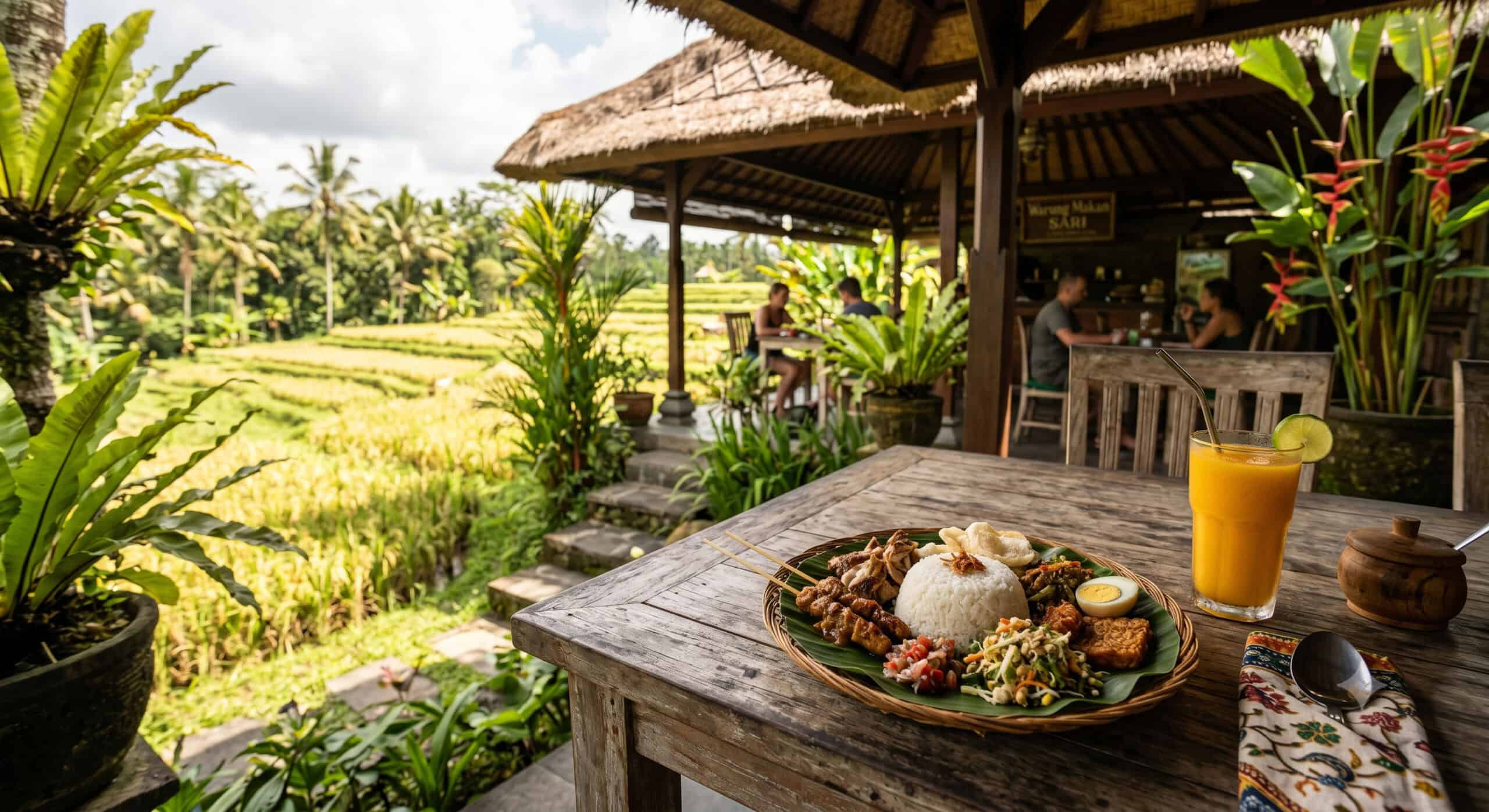
Bali travel costs have a way of defying expectations — and that’s exactly what makes planning this trip tricky. You can eat a full meal for under $3 at a local warung, book a clean guesthouse with a pool for $30 a night, or drop $600 on a private cliffside villa without the decision feeling irrational. The same island. The same week. Wildly different price tags.
Here’s what most budget guides skip: in Bali, the jump from “basic” to “genuinely great” is cheap. The jump from “great” to “ultra-luxury” is where the math gets steep fast — and where the marginal improvements shrink fast too. For most travelers, the real magic lives in the middle, where you’re eating well, staying somewhere beautiful, and not checking your bank account every morning.
This guide breaks down honest Bali costs across every level — from backpacker hostels to private infinity pool villas — including the entry fees, tourist taxes, and hidden expenses that catch people off guard every single trip.
Last verified July 2026: exchange rate, e-VOA fee, tourist levy, and scooter/driver rates re-checked against current sources for this update.
What Does a Trip to Bali Actually Cost? (Daily Budget Snapshot)
Before diving in, here’s a realistic starting point. These are per-person daily estimates excluding flights and any big-splurge days:
- Budget traveler: ~$35–$60/day (hostel or basic guesthouse, warung meals, scooter or rideshare)
- Mid-range traveler: ~$70–$150/day (private room or boutique hotel with pool, mix of warungs and nicer dinners, driver for day trips)
- Luxury traveler: ~$250+/day (private villa, resort living, fine dining, private drivers on demand — and genuinely no upper limit)
The three biggest variables: where you sleep, how you get around, and how often you end up at a trendy beach club with a $17 coconut cocktail. All three are completely controllable.
Accommodation Costs in Bali — From $10 Dorms to $600 Villas
Where you sleep is the single biggest budget variable in Bali, and the range is enormous. At the budget end, hostel dorms start around $8–$15 per night — more with air-conditioning. Couples typically get better value from a basic private room: a clean guesthouse with a pool in areas like Canggu or Ubud can run $25–$45 per night and genuinely feels like a deal most of the world can’t match.
Mid-range travelers — those wanting a private pool, more reliable Wi-Fi, and staff who remember your coffee order — are looking at $60–$120 per night for a boutique hotel or well-reviewed homestay in Seminyak, Ubud, or Canggu. That’s Bali’s true sweet spot: the kind of accommodation that impresses people back home when you post photos, without requiring a financial recovery period afterward.
Luxury clocks in at $200–$500+ per night for private pool villas, rising to $500–$1,000+ during peak season (July–August and December–January) at Uluwatu cliffside resorts. For a full neighborhood-by-neighborhood breakdown of where to base yourself and what each area costs, see our guide to the best places to stay in Bali.
One practical note: peak season drives accommodation prices up 30–60% in the most popular areas. Visiting during shoulder season — May–June or September–October — can cut your accommodation costs meaningfully while still offering reliable weather. See our guide to the best time to visit Bali for the full seasonal cost breakdown.
Food Costs in Bali — Warungs, Cafés, and the Instagram Tax
Bali food can be astonishingly cheap — or quietly expensive if you eat every meal at places designed to look good in photos. Both exist on every block, and knowing which is which makes a real difference.
At a warung (a small, family-run eatery), a full plate of nasi campur — mixed rice with meat, vegetables, and sambal — runs IDR 25,000–40,000, or roughly $1.50–$2.50. That’s a proper, filling meal, usually better than anything you’ll eat at a hotel buffet. Babi guling (suckling pig) at spots like Ibu Oka in Ubud is a Bali bucket-list item and costs about $5–$7 for a full plate. For the best morning options, our roundup of top breakfast spots in Bali covers the most reliable — and affordable — places across the island.
Mid-range dining — a sit-down restaurant with good food and actual ambiance — typically runs $8–$15 per person. This is where Bali starts feeling almost unfair if you’re used to restaurant prices in the U.S. or Europe. Dinner at Bebek Bengil (Dirty Duck Diner) in Ubud or a fresh seafood spread at Jimbaran Beach falls squarely in this range. Beach clubs and upscale dining jump to $40–$100+ per person, and Omnia Uluwatu charges an entrance fee on top of your food and drinks. Worth it once. Probably not three times.
Bali Belly is real and hits people at every budget level. Busier warungs with high turnover tend to be safer than quiet spots where the rice looks like it’s been sitting since yesterday. Keep some basic stomach medicine in your bag regardless of where you eat.
Getting Around Bali — Scooters, Rideshare, and Private Drivers
Transportation is either the best part of Bali or the most stressful, depending on how you approach it. Scooter rentals run about IDR 70,000–100,000 per day (~$4–$5.60 at current exchange rates) for a standard bike. Weekly rates drop the per-day cost further. They’re flexible and fast in lighter traffic, but Kuta and Canggu during the day are not light traffic. If you’re not confident on a motorbike, don’t feel pressured — many people have a great Bali trip without touching a scooter. Importantly: check whether your license covers motorbike riding abroad. Many countries have restrictions, and if you’re in an accident without appropriate coverage, your insurance claim gets complicated fast.
Grab and Gojek (Indonesia’s rideshare apps) are reliable and cheap for short trips in most areas. In some tourist hotspots, local taxi groups discourage rideshare pickups at the main entrance — walk a couple of blocks, request your ride, problem solved.
For temple circuits, multi-stop day trips, or anything that involves navigating rural roads, hiring a private driver is worth every rupiah. A full day typically runs $35–$60, and you get air-conditioning, local knowledge, and zero parking drama in return. It’s genuinely one of Bali’s most underrated bargains — especially when you’re visiting the places covered in our list of top things to do in Bali.
Entry Fees, Taxes, and the Hidden Costs Nobody Warns You About
This is the section most Bali budget guides skip, and it’s where first-timers consistently get caught off guard.
Bali Tourist Levy: Since February 2024, every international visitor entering Bali must pay a mandatory IDR 150,000 (~$8 USD at current exchange rates) per person, per entry. It applies regardless of age — infants included. Pay online at the official Love Bali portal before you fly and save your QR code. The airport kiosk works too, but there can be a wait during busy arrivals. If you’re reading this before your trip, pay it now and move on.
Visa on Arrival (e-VOA): Most nationalities pay IDR 500,000 (~$28 at current exchange rates) for a 30-day e-VOA, extendable once for another 30 days. Our guide to flying to Bali from the US covers the full arrival process, including the digital customs declaration now required within 48 hours of landing.
Other costs that pile up: ATM fees and exchange rate spreads (use bank-affiliated ATMs; avoid street money changers with suspiciously good rates); temple sarong rental or donations (~$1–$3 per visit); small parking fees at beaches, temples, and restaurants; entrance fees at major sites like Tanah Lot, Tegallalang, and Uluwatu (typically $2–$5 each); and sunscreen, which costs significantly more in Bali than at home — bring your own. If you’re planning to browse the markets and boutiques, budget separately — Bali’s shops have a talent for separating you from your money in the most enjoyable way. Our guide to shopping in Bali maps out where to go by area and budget.
Travel Insurance for Bali — This One’s Non-Negotiable
Travel insurance is easy to skip when you’re trying to trim costs. Don’t skip it in Bali. The island has solid medical facilities in tourist areas, but anything serious — a scooter accident, appendicitis, dengue fever, a bad spinal injury — may require evacuation to Singapore or Bangkok for specialist treatment. Emergency medical evacuation alone can run $30,000–$100,000 without coverage. A two-week travel insurance policy costs $30–$60 for most travelers.
Before you buy, read the fine print on motorbike coverage. Many standard policies exclude accidents on motorbikes if you don’t hold the appropriate local license. If you plan to rent a scooter, make sure your policy explicitly covers it. Also confirm that the policy covers trip cancellation, lost luggage, and medical expenses — not just one category. SafetyWing (monthly subscription, strong Southeast Asia coverage) and World Nomads (good for adventure activities) are both commonly used by travelers to Bali and generally well-reviewed.
How to Make Your Bali Budget Go Further
A few moves that make a real difference without making your trip feel like a cost-cutting exercise:
Eat at a warung for lunch at least once a day. Save your bigger food spend for dinners that are actually special — a sunset seafood dinner in Jimbaran or a cliffside restaurant hits differently when your midday meal cost $2.50. Use Grab or Gojek for anything short, hire a private driver for full days with multiple stops. The math works in your favor either way.
Book accommodation in advance for July–August and December–January travel — prices jump and the best-value spots fill up weeks out. Travel shoulder season (May–June or September–October) if flexibility allows; you’ll pay less, share fewer roads, and still get very good weather. When haggling at markets, keep it friendly. The best approach is offering a price you’d genuinely be happy with, rather than anchoring low and walking away. You can still negotiate — just keep it human.
Frequently Asked Questions About Bali Travel Costs
How much does a two-week trip to Bali cost per person?
A budget traveler spending $40–$50/day can expect to pay roughly $560–$700 for two weeks of daily expenses, excluding flights. Mid-range travelers ($80–$120/day) should budget $1,100–$1,700. On top of that, add your e-VOA (~$28), the Bali Tourist Levy (~$8), travel insurance ($40–$60 for two weeks), and your flights. Budget flights from the US with one connection typically start around $700–$1,000 roundtrip depending on departure city and booking lead time.
Is Bali cheap for American travelers?
Yes, significantly. The exchange rate (roughly 17,900 IDR per USD as of mid-2026) means your dollars go a long way. A mid-range dinner that would cost $40–$60 in most U.S. cities runs $10–$15 in Bali. Accommodation with a pool that would be a budget-busting $200+ in Europe might be $50–$80 here. Transportation is similarly discounted. The main exceptions are imported goods (alcohol, cheese, branded electronics) and luxury services that price themselves for Western wallets.
How much does a scooter rental cost in Bali?
Daily scooter rental typically runs IDR 70,000–100,000 (~$4–$5.60/day) for a standard bike, with better rates for weekly or monthly rentals. Prices vary by area, bike condition, and how much negotiating you do upfront. Always inspect the bike for existing damage before you ride off — photograph everything — and confirm your insurance situation before renting.
Do you need cash in Bali or can you use a credit card?
Both, but cash is essential. Warungs, markets, parking attendants, and most small temples are cash-only. Larger restaurants in tourist areas and most shops accept cards. Withdraw IDR from bank-affiliated ATMs (BCA, BNI, Mandiri) to avoid excessive fees, and notify your bank before you travel — Indonesian ATM transactions frequently trigger fraud alerts on cards that haven’t been used abroad before.
How much is the Bali tourist tax in 2026?
The Bali Tourist Levy is IDR 150,000 (~$8 USD at current exchange rates) per person, per entry, and has been mandatory since February 2024. It applies to all international visitors regardless of age. Pay online at lovebali.baliprov.go.id before you fly — you’ll receive a QR code to show at the airport. This is separate from the national Visa on Arrival fee (~$28 at current exchange rates).
Is Bali worth visiting on a tight budget?
Absolutely. Bali has been a genuine budget destination long before the luxury market arrived, and that infrastructure still exists. Guesthouses with pools, $2 warung meals, free beaches, and $5 temple visits haven’t disappeared — they’re just easier to find if you know where to look. The key is being selective about when to spend up (a special dinner, a good driver for a long day) and when the “upgrade” really isn’t worth it.
Book smart, travel shoulder season if you can, and don’t skip the travel insurance. The rest of Bali pretty much sorts itself out.
Recent Posts
Frankfurt Airport Layover Guide: What to Do With 6–24 Hours (2026)
Frankfurt Airport (FRA) is Europe's fourth-busiest airport, which means the odds of getting routed through it on your way to Prague, Nairobi, or Bangkok are pretty good — and so is the chance...
You're staring at a scooter accident video on TikTok, a headline about a missing tourist, and a friend's warning about "that Bali crime wave," and you're wondering: is Bali safe in 2026? Short...