
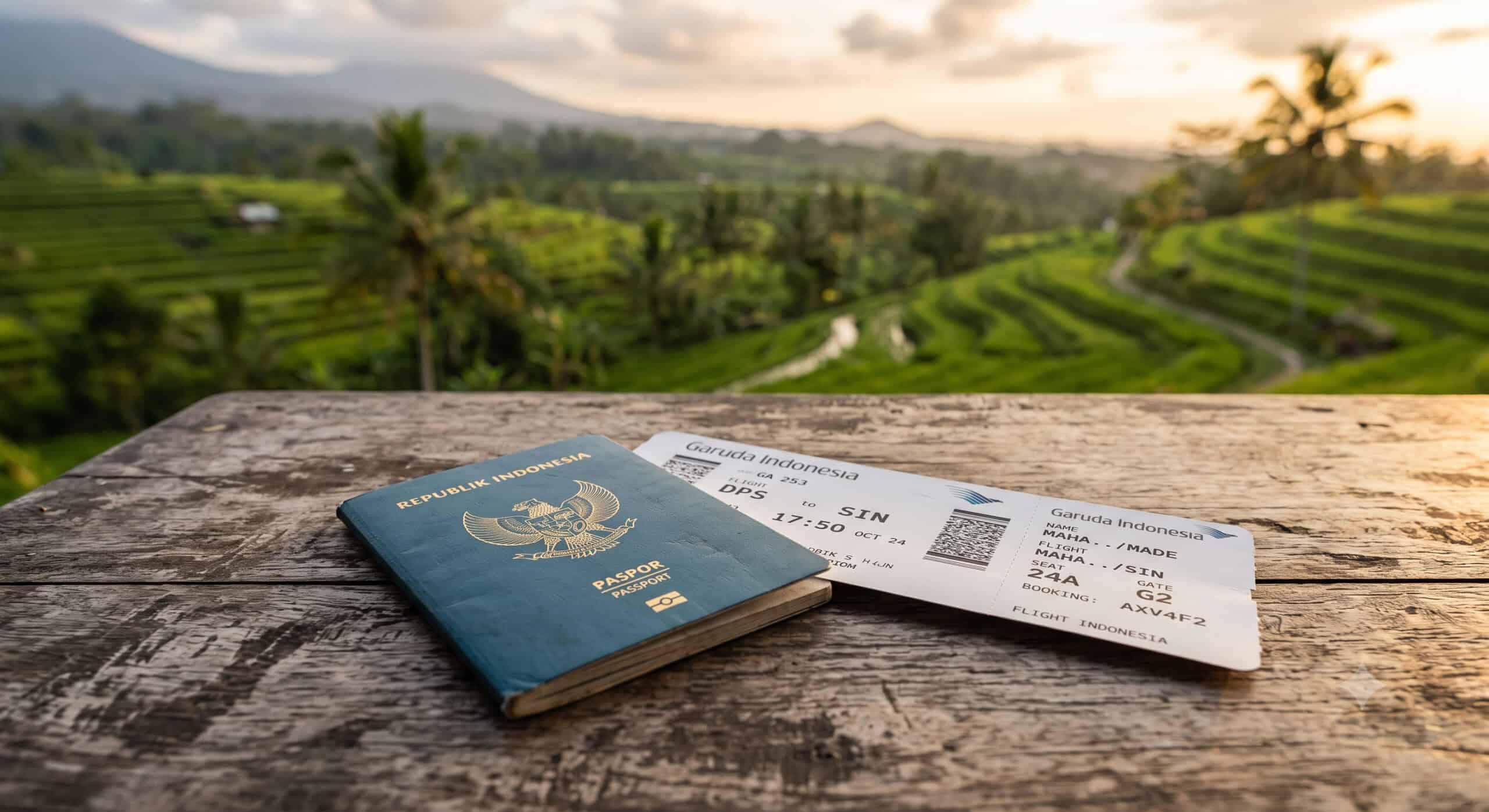
If you’re planning a trip in 2026, two costs catch almost every first-time visitor off guard: the Bali visa 2026 fee at the airport, and a separate Bali tourist tax 2026 that the provincial government now checks at arrival and, increasingly, at hotel check-in. Neither is complicated once you know the numbers, but skip either one and you’re looking at a line at immigration, a surprise charge at your hotel, or in rare cases a denied boarding at check-in overseas. Here’s exactly what you’ll pay, how to pay it, and why the island’s own governor just admitted the tax isn’t working the way it’s supposed to.
Bali Visa 2026: What You Actually Need Before You Land
Most travelers from the U.S., Canada, the U.K., Australia, and the EU need a visa to enter Indonesia — there’s no visa-free entry for these passports. What you’re actually applying for is the e-VOA (electronic Visa on Arrival), a single-entry tourist visa that costs IDR 500,000, or roughly $35, and covers a 30-day stay. It’s separate from the tourist tax, separate from your flight, and non-refundable once approved, so don’t buy it “just in case” if your trip dates aren’t locked.
Citizens of around 97 countries qualify for the e-VOA. You can apply online through Indonesia’s official immigration portal up to 30 days before departure (aim for at least 48 hours ahead so approval clears in time), or skip the paperwork and pay at the visa-on-arrival counter after you land at Denpasar (DPS). Applying online first gets you access to the autogates, which on a busy arrivals day can save 30–45 minutes over the manual queue. You’ll need a passport valid for at least six months past your arrival date and, technically, proof of onward travel — immigration rarely asks to see it, but airlines checking you in overseas sometimes do. If you’re still sorting out flights, our guide on flying to Bali from the United States covers layover options and realistic total travel time.
How Much Is a Bali Visa in 2026? The Exact Costs
Here’s the direct answer: the e-VOA costs IDR 500,000 (about $35 USD) for a 30-day stay. That’s the whole visa fee — there’s no separate “processing fee” if you apply through the official government channel. Third-party visa services will charge more for the same visa, sometimes double, in exchange for handling the application for you. For most travelers comfortable filling out an online form, it’s not worth the markup.
- e-VOA visa fee: IDR 500,000 (~$35)
- Visa validity: 30 days from arrival
- Extension fee: another IDR 500,000 (~$35)
- Bali tourist tax (separate charge): IDR 150,000 (~$10)
Payment on the government portal accepts major credit cards. Whatever you do, don’t enter your card details on a site that isn’t the official Indonesian immigration domain — copycat visa sites routinely charge $60–$90 for the identical $35 visa and bank on travelers not checking the URL closely.
Extending Your Bali Visa Past 30 Days
The e-VOA can be extended exactly once, for another 30 days, bringing your total possible stay to 60 days. The extension costs another IDR 500,000 and has to be handled in person at an Indonesian immigration office (Kantor Imigrasi) — it isn’t an online renewal. Start the process before your current 30 days runs out; immigration offices in Denpasar and Ubud get busy, and same-day appointments aren’t guaranteed. Most travel agencies and villa concierges in Bali will handle the extension paperwork for a service fee if you’d rather not deal with a government office in person. A longer stay is also a good excuse to split time between areas — our guide to the best places to stay in Bali breaks down which neighborhoods suit which kind of trip.
There’s no third extension available on the tourist e-VOA. If you need more than 60 days total, you’re looking at a different visa category (a social-cultural visa or a longer-stay visa arranged before you travel), not an extension of the tourist visa.
Bali Tourist Tax 2026: The IDR 150,000 Levy Explained
The Bali tourist tax 2026 is a one-time IDR 150,000 (about $10) charge, completely separate from your visa fee, and it applies once per visit regardless of how long you stay. The money funds cultural preservation, beach and reef cleanup, and infrastructure projects around the island — it’s not an entry requirement in the same legal sense as the visa, but immigration and hotel staff do check for proof of payment.
Pay it online in advance at lovebali.baliprov.go.id, the only official site for the levy. Enter your name exactly as it appears on your passport, your passport number, nationality, and arrival flight details, then pay by card or a local wallet like GoPay or OVO. You’ll get a QR code by email — screenshot it, because airport wifi isn’t always reliable the moment you land. Grabbing a local eSIM before you land solves that problem before it starts. If you skip the online step, payment counters at Denpasar airport and the main seaports take card and QRIS payments only, no cash.
One warning worth repeating: scam sites ending in .com or .org have copied the Love Bali design and charge IDR 300,000 or more for the same levy. The real site’s domain always ends in .go.id — Indonesia’s official government suffix. If a payment page asks for more than IDR 150,000 or doesn’t end in .go.id, close the tab.
Why Only 35% of Visitors Are Paying the Levy
On January 3, 2026, Bali Governor Wayan Koster admitted publicly that the tourist levy program is badly underperforming. The province collected roughly $23 million against a target of IDR 500 billion — with around 7 million visitors arriving and each owing IDR 150,000, collections should have topped $70 million. Compliance sits at just 35%, up only slightly from 32% in 2024.
The gap isn’t really about tourists refusing to pay. Reporting on the shortfall points to a simple awareness problem: of the 37 international airlines flying into Denpasar, only five mention the levy anywhere in the booking or check-in process. Most travelers land having never heard of it, which is exactly the situation this guide is meant to prevent. If enforcement tightens in response to Koster’s comments — and provincial officials have signaled it might — expect gate checks to get stricter later in 2026, not looser.
Avoiding Bali Visa and Tourist Tax Scams
Search “Bali visa” or “Bali tourist tax” and the top results are a mix of official channels and third-party agencies that look official but aren’t. A few rules keep you safe: the visa is only ever applied for through Indonesia’s government immigration portal, the tourist tax is only ever paid at lovebali.baliprov.go.id, and neither one requires you to install an app, share your bank login, or pay in cryptocurrency. Visa agencies are legitimate and can be worth the fee if you want someone else handling the paperwork — just confirm the total cost upfront, since some pad the government fee by 2–3x without disclosing it clearly.
Keep digital and printed copies of both your visa approval and your tourist tax QR code. Phone battery dies, wifi drops, and immigration officers in a long queue don’t have patience for you re-downloading an email.
Frequently Asked Questions
How much does a Bali visa cost in 2026?
The e-VOA costs IDR 500,000, about $35 USD, and covers a 30-day stay. This is separate from the IDR 150,000 (~$10) tourist tax, which every visitor also has to pay.
Do I still need to pay the Bali tourist tax if I already paid for my e-VOA?
Yes. The visa fee and the tourist tax are billed and paid through completely separate systems. Paying for your e-VOA does not cover the IDR 150,000 levy — you’ll need to pay both.
Can I extend my Bali visa a second time?
No. The tourist e-VOA allows one extension of 30 days, for a maximum stay of 60 days total. Anyone needing longer has to apply for a different visa category before traveling.
What happens if I don’t pay the Bali tourist levy?
Enforcement has been inconsistent, which is part of why compliance sits at only 35%. That said, hotels and immigration are increasingly checking for the QR code, and officials have signaled tighter enforcement is coming. Paying the small fee in advance avoids any risk of a hassle at check-in.
Is lovebali.baliprov.go.id the only official site for the tourist tax?
Yes. It’s the only domain ending in .go.id, Indonesia’s official government suffix. Sites ending in .com or .org that charge IDR 300,000 or more for the same levy are scams.
Which nationalities are eligible for Bali’s e-VOA?
Around 97 countries qualify, including the U.S., Canada, the U.K., Australia, and most of the EU. Check Indonesia’s official immigration portal for the current list before booking, since eligible countries do change.
Between the visa and the levy, budget about $45 and 15 minutes of paperwork before you ever leave home — cheap insurance against a bad first hour in Bali. Handle both online, save the confirmations, and the rest of your trip starts the way it should: with nothing to think about except which of Bali’s top activities to hit first.
Recent Posts
Frankfurt Airport Layover Guide: What to Do With 6–24 Hours (2026)
Frankfurt Airport (FRA) is Europe's fourth-busiest airport, which means the odds of getting routed through it on your way to Prague, Nairobi, or Bangkok are pretty good — and so is the chance...
You're staring at a scooter accident video on TikTok, a headline about a missing tourist, and a friend's warning about "that Bali crime wave," and you're wondering: is Bali safe in 2026? Short...