
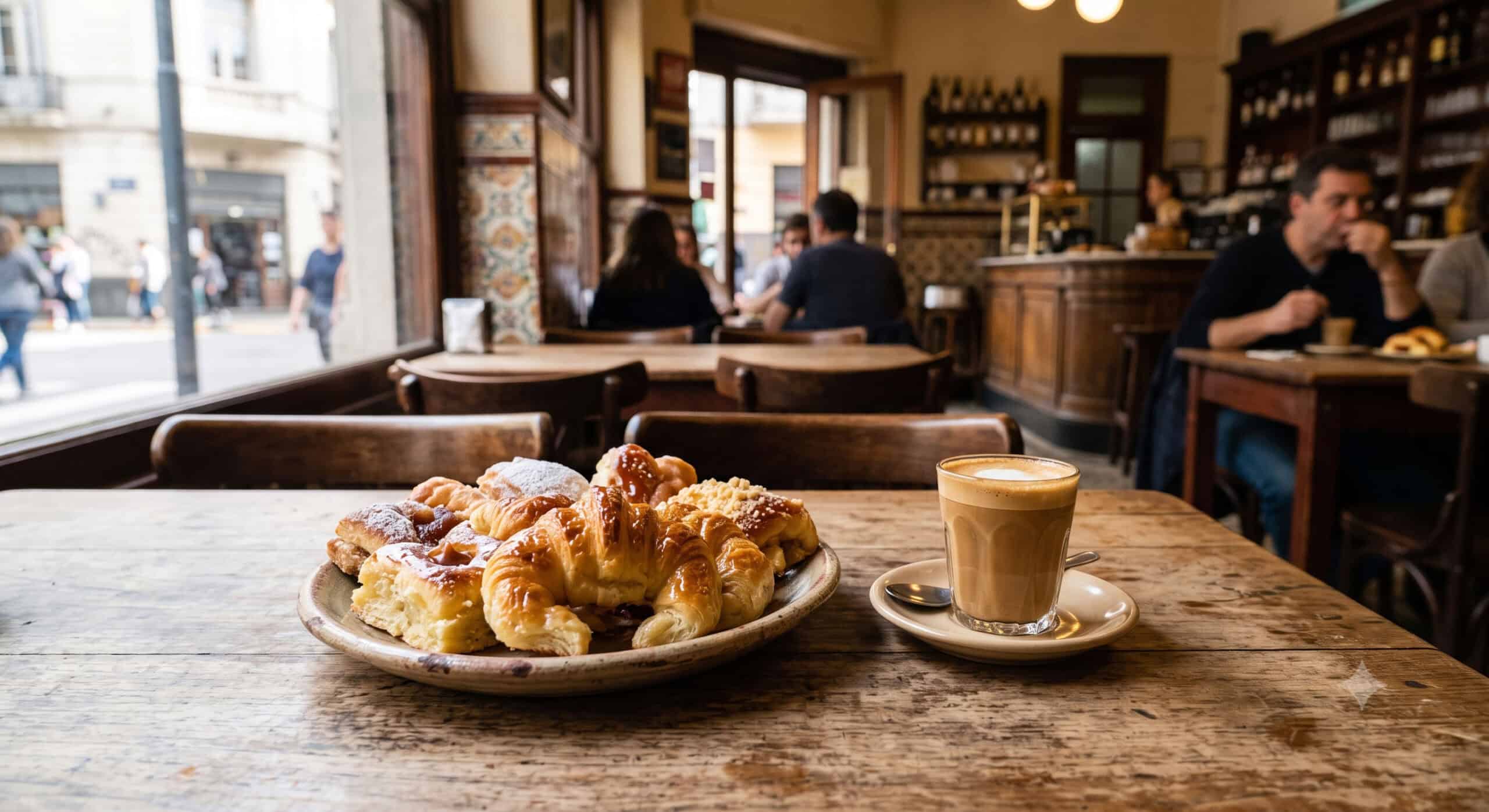
Buenos Aires runs on coffee and pastry. Walk any block in Palermo or Almagro and you’ll catch the smell of fresh medialunas drifting out of a bakery doorway, or spot a table of porteños parked in front of a café con leche that isn’t going anywhere for the next two hours. The best bakeries and cafés in Buenos Aires aren’t hard to find, they’re on nearly every corner, but knowing which ones are worth your limited breakfast slots takes some local knowledge. Whether you’re fueling a full day of walking or just need an excuse to sit down between museums, this list covers historic institutions, French bakeries, and the small neighborhood spots locals actually return to. Here are twelve spots, from a 19th-century confitería to a Colombian-run coffee bar in Palermo, that earn a place on any Buenos Aires itinerary, and pair nicely with the rest of our Buenos Aires travel guides.
Historic Confiterías Worth the Hype
Las Violetas has been serving coffee and cake on the corner of Rivadavia and Medrano in Almagro since September 1884. The dining room still shows off its original stained glass, Carrara marble tables, and bronze chandeliers, and it’s one of the cafés protected under the city’s Bares Notables program for historic bars and confiterías. Order the merienda, an afternoon tea-style spread of small sandwiches, cakes, and medialunas, and give yourself at least an hour; rushing through Las Violetas defeats the point.
Café Tortoni, open since 1858 in the Monserrat neighborhood, is the one stop nearly every Buenos Aires guide agrees on, and for good reason. Jorge Luis Borges and Carlos Gardel both drank here regularly, and the marble-and-mahogany interior hasn’t lost its grandeur. Skip the standard cortado and order a submarino instead, a glass of hot milk with a bar of chocolate you melt in yourself, which somehow makes an ordinary coffee break feel like an occasion.
A French Bakery and a Gluten-Free Find in Palermo
Cocu Boulangerie is about as close as Buenos Aires gets to a real Paris bakery counter. Three French expats opened it in Palermo Soho, and everything, the croissants, the crusty loaves, the pistachio eclairs, is made by hand in an open kitchen you can watch from your table. It’s cash-only and there’s no table service, which trips up a few first-time visitors, but the croissants are worth the adjustment.
Sintaxis is a fully gluten-free restaurant and bakery, which matters more than it sounds like in a city built on wheat pastry. Everything on the shelf and the menu is safe to eat, so it’s one of the few places in Buenos Aires where a celiac traveler can order anything without a second conversation with the staff. Stock up on pastries to take back to your hotel, or sit down for a full meal.
Neighborhood Coffee Shops Locals Actually Use
Catoti in Belgrano is built around its coffee program rather than its pastry case, and it shows, this is where to go for a properly pulled espresso rather than a photogenic croissant. Vive Café in Palermo runs the same idea with a Colombian accent: a Colombian-Argentine couple roasts and sources Colombian beans, and the flat whites are strong enough to notice.
La Noire Café, with locations around Colegiales and Chacarita, is the quieter option, a good pick for a laptop hour or a slow morning, with several vegan and sin TACC (gluten-free) options clearly marked. Bilbo Café in Villa Crespo leans a little more design-forward, but the coffee and brunch menu hold up, and it’s an easy stop to pair with the neighborhood’s boutiques.
Confiterías for Brunch, Something Sweet, and a Slower Morning
Malvón, also in Villa Crespo, is the neighborhood brunch spot that turns into an all-day hangout without really trying. Dos Escudos, with several locations around Recoleta and Retiro, is the reliable option when you need medialunas or a dulce de leche pastry right now instead of after a wait.
Sablêe Vegana, near Núñez and Belgrano, has been making vegan cakes, cookies, and empanadas long enough to have a following outside the vegan community. And Libros del Pasaje, a bookstore in Palermo Soho with a café tucked into its old patio, is worth the detour even if you don’t read Spanish, it’s simply a good place to sit with a coffee and a lemon tart for an hour.
If you’re chasing the single best medialuna in the city, a few more names come up constantly. La Biela in Recoleta pairs its pastries with sidewalk seating across from the famous Recoleta Cemetery. L’Épi Boulangerie is another French bakery with a loyal following, and Oui Oui, a longtime Palermo brunch spot, is known as much for its medialunas as its scrambled eggs. None of them made the main list only because narrowing a bakery guide to twelve stops means leaving a few good ones on the cutting room floor.
How to Order Like a Local
A few words will get you through most café menus. Medialunas are the small, sweet croissant-style pastries you’ll see everywhere; facturas is the broader category that covers anything glazed, filled, or twisted. A cortado is espresso cut with a splash of milk, while café con leche is the fuller breakfast version. If you end up at a milonga after dinner, Buenos Aires’ tango dance halls often double as late-night cafés, and you’ll find plenty serving coffee and pastries into the early morning.
If you’re stacking multiple stops into one day, order smaller drinks and split pastries between however many people you’re with. Three full-size medialunas and a slice of cake at every stop sounds fun until stop three, when it stops being fun.
A Simple Café Crawl by Neighborhood
If you want to hit more than one stop without crisscrossing the city, group by neighborhood. Spend a Palermo morning at Cocu, wander over to Libros del Pasaje for a slower second coffee, and finish at Vive Café or La Noire if you’re not pastried out yet. For a classic-and-historic afternoon, pair Las Violetas in Almagro with Café Tortoni in Monserrat, ideally with a long lunch break between them so you’re not ordering two submarinos back to back. And if you’re based in Villa Crespo, Malvón and Bilbo Café are close enough to do both in one loop, with time left over to wander the neighborhood’s vintage shops.
Frequently Asked Questions
What is a medialuna, and how is it different from a croissant?
A medialuna is Argentina’s answer to the croissant, smaller, sweeter, and usually glazed with a light sugar syrup. Menus typically list two versions: manteca (butter, flakier) and grasa (made with lard, denser and less sweet).
What’s the best historic café in Buenos Aires?
Café Tortoni and Las Violetas are the two most established, and both are protected under the city’s Bares Notables program. Tortoni is more central and busier with tourists; Las Violetas in Almagro tends to feel a little more local.
Are there good gluten-free or vegan bakeries in Buenos Aires?
Yes. Sintaxis is a fully gluten-free restaurant and shop, and Sablêe Vegana focuses entirely on vegan baking, so both let you order without checking every ingredient.
Do I need a reservation for Café Tortoni?
Walk-ins are usually fine for coffee, but Tortoni also runs a dinner-and-tango show that requires booking ahead. Confirm current hours before you go, since historic cafés sometimes adjust them around holidays.
What should I order at a confitería if I only get one stop?
A medialuna and a cortado covers the basics anywhere. At Café Tortoni specifically, order the submarino instead of a regular coffee, it’s the one drink worth the extra ritual.
Once you’ve picked a few stops, lock in where you’re staying, our neighborhood guide breaks down which area fits your trip, and check flight options while you’re planning. Buenos Aires’ café culture rewards slowing down, so leave more time than you think you need between stops.
Recent Posts
Frankfurt Airport Layover Guide: What to Do With 6–24 Hours (2026)
Frankfurt Airport (FRA) is Europe's fourth-busiest airport, which means the odds of getting routed through it on your way to Prague, Nairobi, or Bangkok are pretty good — and so is the chance...
You're staring at a scooter accident video on TikTok, a headline about a missing tourist, and a friend's warning about "that Bali crime wave," and you're wondering: is Bali safe in 2026? Short...