
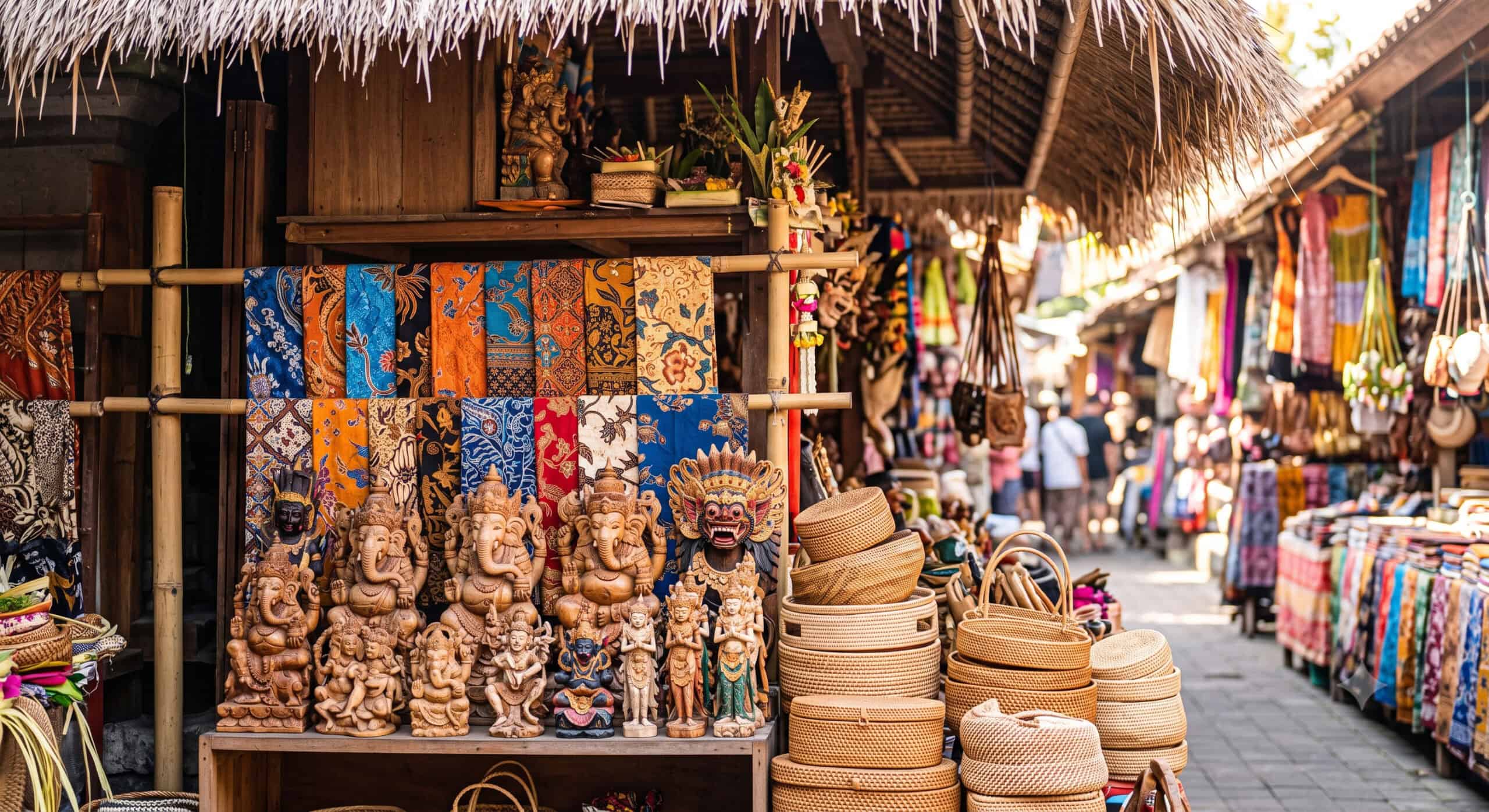
Somewhere between your third temple and your first plate of nasi goreng, Bali will get you shopping. A “just browsing” stop turns into a full bag, and a full bag turns into a suitcase you’re mentally repacking at the airport. That’s just how the island works, and it’s honestly part of the fun.
This guide covers the best places to shop in Bali in 2026: air-conditioned malls in Kuta and Seminyak, the market stalls of Ubud and Gianyar, the boutique strips of Canggu, and the ceramics studios of Jimbaran. Whether you’ve got twenty minutes between meetings or a wide-open free day, there’s a stop here worth the detour.
The Best Places to Shop in Bali at a Glance
If you’re short on time, here’s the shortlist:
- Beachwalk Shopping Center (Kuta) – Bali’s biggest mall and an easy heat break.
- Seminyak Village (Seminyak) – a smaller, boutique-leaning mall.
- Ubud Art Market (Ubud) – classic textiles, wood carvings, and gifts.
- Sukawati Art Market (Gianyar) – bargain-friendly crafts and art.
- Canggu markets – Love Anchor Bazaar and the Samadi Sunday Market for indie fashion and local produce.
- CARGA and Jenggala Keramik (Seminyak/Jimbaran) – Bali’s best homewares and ceramics.
Most of these sit within a 20 to 40 minute drive of each other, so if you’re basing yourself somewhere central, our guide to the best places to stay in Bali has good options in Seminyak and Kuta, you can realistically hit two or three stops in a day without feeling rushed.
How to Bargain in Bali Without Feeling Awkward
Haggling is normal in Bali’s traditional markets and at most small stalls, though it’s not something you do at malls or most boutiques, where prices are fixed.
- Smile and ask the price first.
- Counter politely – 30 to 50 percent lower is a normal opening move in tourist-heavy markets.
- Bundle items: “If I buy two, what’s your best price?”
- If it’s not landing, say thanks and walk. No drama, no hard feelings.
Bring small bills. It speeds up every transaction and saves you from the “sorry, no change” shuffle that happens at least once a day in Bali.
Shopping Malls in Bali for AC and Easy Browsing
Beachwalk Shopping Center (Kuta)
If your ideal shopping day includes air conditioning, a coffee break, and a wander that somehow eats three hours, Beachwalk is your place. It’s a resort-style, open-air mall a few steps from Kuta Beach, with international brands, restaurants, and a movie theater mixed in. Posted hours run roughly 10:30 a.m. to 10:30 p.m. Sunday through Thursday, later on weekends. Check the official Beachwalk site before you go since hours shift seasonally.
Seminyak Village (Seminyak)
Seminyak Village is the more curated option: smaller, quieter, and leaning boutique rather than mega-mall. It’s typically open daily from 10 a.m. to 10 p.m., which makes it an easy stop between lunch and sunset drinks. Best for fashion, gifts, and a break from the humidity.
Bali’s Best Art Markets for Souvenirs and Handmade Finds
Ubud Art Market
The Ubud Art Market is one of the busiest shopping stops on the island, and it earns the reputation. Expect woven bags, sarongs, wood carvings, paintings, and jewelry packed into a covered maze of stalls. Hours vary vendor to vendor, but most are open and active by 8 a.m., winding down around 6 p.m. Pair a morning here with one of Bali’s best activities and you’ve got a full day sorted before lunch.
Kumbasari Art Market (Denpasar)
Kumbasari feels bigger, more local, and a little more chaotic than Ubud’s market, in a good way. It’s known for textiles, rattan goods, and carvings, plus a fair number of stalls selling everyday items rather than souvenirs. Not every stall opens every day, and things get noticeably quieter around religious holidays, so go in with flexible expectations. Pair it with the neighboring Badung Market if you want a shopping trip that doubles as a snack crawl.
Sukawati Art Market (Gianyar)
Sukawati has a long-standing reputation for handicrafts and genuinely good deals if you’re willing to bargain. It’s generally open from around 6 a.m. to 6 p.m., though most vendors don’t really get going until 9 or 10 a.m. That’s also the sweet spot for first-sale bargaining power, before the market fills up. Paintings, carved pieces, masks, and textiles here often beat the prices you’ll find in more touristy areas.
Boutique Shopping in Seminyak, Canggu, and Ubud
Seminyak’s shopping streets
Seminyak has two main shopping stretches, and they feel different. Jalan Kayu Aya – often called Eat Street or Oberoi – is lined with boutiques, lifestyle stores, and cafes built for browsing. Jalan Raya Seminyak runs longer and mixes in more surf and indie labels. If you’re shopping for something to wear to a temple later in the trip, it’s worth checking what’s actually appropriate to wear in Bali before you buy. Some of the linen and rayon pieces sold here work perfectly, but not everything does.
Canggu’s beachy, indie scene
Canggu is where Bali’s smaller labels and local designers show up – think swimwear, resort wear, and the kind of jewelry that becomes your entire vacation uniform. The Love Anchor Bazaar runs seven days a week with a rotating mix of handmade goods and beach fashion. The Samadi Sunday Market is smaller and more community-focused, running Sundays from roughly 9 a.m. to somewhere between 2 and 3 p.m. depending who you ask, so it’s worth a check since Sunday markets shift with the season.
Ubud’s artisan style
Ubud boutiques skew toward natural fibers, handmade jewelry, and clothing that looks like you just came from a retreat, even if you only came from lunch. It’s slower shopping: more browsing, less transacting, which fits the town’s whole personality. If you’re navigating between shopping districts without local data, grabbing an eSIM before you land makes ordering rides between Ubud, Seminyak, and Canggu a lot less stressful.
Where to Find Balinese Homewares and Ceramics
If Bali shopping has one clear specialty, it’s homewares. Hand-thrown ceramics, carved wood decor, woven baskets, and serving pieces show up in nearly every shop, and the good ones are worth planning suitcase space around.
CARGA (Seminyak)
CARGA is a go-to for Indonesian decor: ceramics, textiles, and gift-worthy pieces from artisans across Java and Bali. Listed hours run 8 a.m. to 9:30 p.m. daily, though it’s worth confirming before a special trip.
Jenggala Keramik (Jimbaran)
Jenggala is one of Bali’s longest-running ceramics names, and its Jimbaran flagship pairs a retail shop with a hands-on Paint-a-Pot experience: pick a piece, decorate it yourself, and it’s fired and ready in five to seven days. The activity typically runs 10 a.m. to 5 p.m., with the last session starting around 4 p.m.
If you’re furniture shopping anywhere on the island, ask about shipping before you fall in love with a piece. Most reputable shops can arrange it. You just want the packaging, insurance, and timeline spelled out before you pay.
What to Buy in Bali (and What to Skip)
The best souvenirs are the ones that feel specific to the island and actually get used once you’re home.
- Textiles: sarongs, scarves, lightweight shirts, woven bags
- Homewares: ceramics, serving trays, rattan pieces, candle holders
- Art: paintings, prints, masks, small carvings
- Jewelry: artisan-made pieces – ask about materials and care
- Food gifts: coffee, spice blends, packaged sweets – check customs rules before you fly
Skip anything that feels obviously mass-produced unless you genuinely love it, and be cautious with “designer” goods sold at questionable stalls. If authenticity matters to you, stick to reputable stores and malls.
Bali Shopping Questions Travelers Ask
What are the best places to shop in Bali?
For easy, air-conditioned browsing: Beachwalk in Kuta and Seminyak Village. For classic souvenirs and handmade goods: the Ubud Art Market. For bigger market energy and real bargaining: Sukawati and Kumbasari.
What is the main shopping street in Seminyak?
Jalan Kayu Aya, also called Eat Street or Oberoi, is generally considered Seminyak’s main shopping strip, with Jalan Raya Seminyak as a longer secondary stretch.
Are Bali’s markets open every day?
Most are open daily, but stall-by-stall availability varies, and some markets are noticeably quieter during religious ceremonies and public holidays.
Is bargaining expected at Bali’s malls?
No. Malls and most boutiques use fixed prices. Bargaining is for traditional markets and small independent stalls.
What souvenirs should I bring home from Bali?
Textiles, ceramics, small art pieces, and artisan jewelry travel well and hold up better than mass-produced trinkets. Packaged food gifts like coffee and spice blends are popular too, but check your home country’s customs rules first.
What’s the best time of day to shop at Bali’s art markets?
Late morning, around 9 or 10 a.m., tends to work best. Vendors are set up and motivated for an early sale, and you’ll beat both the heat and the afternoon crowds.
Shopping in Bali rewards a slow morning and a flexible afternoon more than a strict itinerary. The best finds tend to show up when you’re not looking for them. If you’re still mapping out the rest of the trip, the best time of year to visit Bali is worth a look before you lock in dates, since market crowds and shop hours both shift with the season.
Recent Posts
Frankfurt Airport Layover Guide: What to Do With 6–24 Hours (2026)
Frankfurt Airport (FRA) is Europe's fourth-busiest airport, which means the odds of getting routed through it on your way to Prague, Nairobi, or Bangkok are pretty good — and so is the chance...
You're staring at a scooter accident video on TikTok, a headline about a missing tourist, and a friend's warning about "that Bali crime wave," and you're wondering: is Bali safe in 2026? Short...