
Buenos Aires doesn’t ease you in. You land, drop your bags, and within an hour someone’s trying to teach you a tango step, a parrilla is grilling something the size of a dinner plate, and a mural three blocks long is quietly arguing with itself about Diego Maradona. It’s a lot, in the best possible way. If you’re trying to nail down the best things to do in Buenos Aires, the real challenge isn’t finding options — it’s fitting them into the days you actually have.
This guide covers the attractions that keep pulling travelers back: tango nights, the San Telmo market, the city’s standout museums, a day trip to Tigre, and the neighborhoods that make Buenos Aires feel less like a checklist and more like a place you’d want to live for a while. Flying in from the US? Check our breakdown of the best way to fly to Buenos Aires from the US before you book. And once you land, picking the right base matters — our guide to the best neighborhoods to stay in Buenos Aires breaks down Palermo, Recoleta, and San Telmo by vibe and budget.
Tango: Catch a Show or Find a Milonga
Tango isn’t a tourist performance bolted onto the city — it’s part of how Buenos Aires spends its evenings. You’ve got two very different ways into it. A tango show gets you the theatrical version: live orchestra, dramatic lighting, dancers who move like they don’t have joints. It’s a great first exposure and worth doing once.
The other route is a milonga, a social tango dance night where locals actually show up to dance, not to be watched. You don’t need to dance to enjoy one — grab a table, order a Malbec, and watch couples who’ve clearly been doing this since before you were born. Beginner-friendly milongas with early practice sessions pop up regularly in San Telmo, Almagro, and Palermo. If you want to build a full night around it, our guide to the best nightlife spots in Buenos Aires has specific venues and start times worth checking before you go.
San Telmo and the City’s Best Markets
San Telmo is where Buenos Aires shows off its antiques, leather goods, vinyl records, and hand-poured mate cups. The indoor Mercado de San Telmo runs daily, but the neighborhood hits a different gear on Sundays, when the streets fill with the Feria de San Telmo — vendor stalls stretching for blocks, tango dancers performing on corners, and enough choripán stands to ruin your dinner plans in the best way. Show up before 11am if you want to browse without shuffling through a crowd.
For something less polished and more distinctly Argentine, Feria de Mataderos runs on Sundays from March through December (Saturday nights in January and February), with gauchos, folk dancing, and regional food that rarely makes it into the tourist center. Either market pairs well with a stop at one of the city’s better coffee shops — our list of the best bakeries and cafés in Buenos Aires is worth bookmarking for the walk back. Bring cash for smaller stalls, and keep bags zipped when things get crowded.
Museums Worth Rearranging Your Schedule For
MALBA is the one to prioritize if you only hit one museum. Its Latin American art collection is genuinely excellent, and the rotating exhibitions are usually worth the trip on their own — check current hours and exhibitions on the official MALBA site before you go, since programming shifts often.
Museo Nacional de Bellas Artes covers European and Argentine fine art and pairs naturally with a Recoleta afternoon. Museo Evita, tucked into a quiet corner of Palermo, gives you a focused, human look at Eva Perón’s life without turning into a political lecture. And if you’re traveling with kids, or just like planetariums, Planetario Galileo Galilei runs shows worth checking the schedule for before you build a day around it.
Tigre and the Paraná Delta: Your Day Trip Out of the City
Buenos Aires isn’t a beach town, but Tigre is the closest thing to a reset button. About an hour outside the city, it trades traffic and grid streets for river channels, wooden boat docks, and a pace that feels imported from somewhere slower. Puerto de Frutos, the town’s main market area, is worth an hour of wandering for crafts and local goods, even if you don’t buy anything.
The move is to do a boat ride through the Delta first, while the light’s still good, then explore the town and markets afterward. Go on a weekday if you can — weekends bring bigger crowds, though also more energy if that’s what you’re after.
La Boca’s Caminito, Fútbol Culture, and a Very Argentine Polo Match
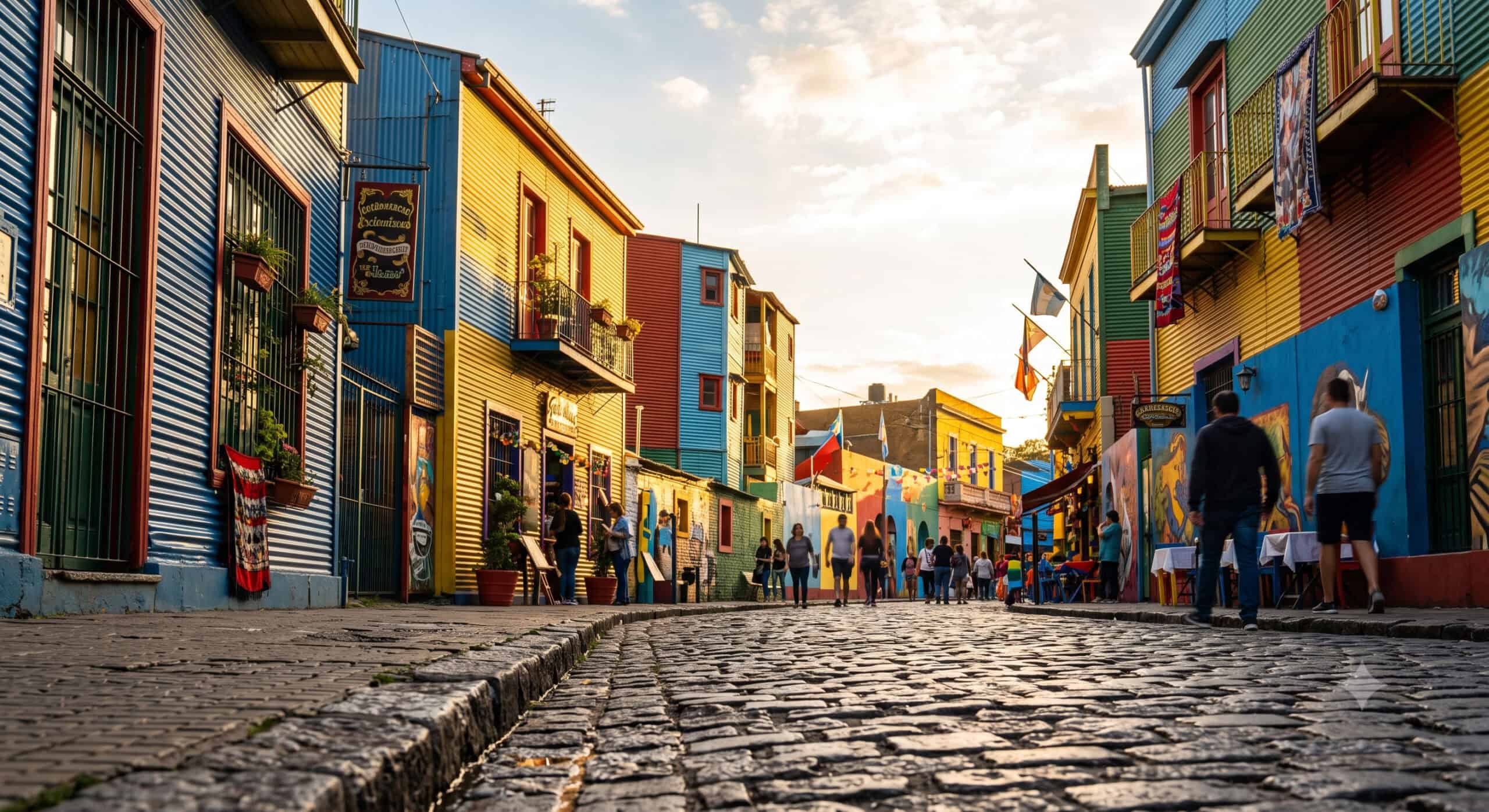
Caminito, in the La Boca neighborhood, is the most photographed strip of Buenos Aires for a reason: corrugated metal houses painted in competing shades of blue, yellow, and red, tango dancers working the crowd, and a port history that still shapes the neighborhood’s character. Visit during the day, stick to the main strip, and keep valuables tucked away — La Boca outside the tourist core isn’t an area to wander casually.
Fútbol runs even deeper than tango here. A stadium tour at Boca Juniors’ Museo de la Pasión Boquense or River Plate’s Museo River gets you inside the rivalry even if you never catch a match — tickets and tour times are sold directly through each club’s site, and both are worth checking before match days, when access can change. If your trip lands in November or December, the Argentine Open Polo Championship at Campo Argentino de Polo in Palermo is worth building a day around — it’s one of those sports that looks slow on TV and turns out to be terrifyingly fast in person.
Slow Down: Recoleta Cemetery, Teatro Colón, and Getting Around
Recoleta Cemetery reads less like a graveyard and more like an open-air architecture museum — mausoleums stacked with family crests, narrow stone pathways, and Eva Perón’s grave tucked into a corner that’s easy to miss if you don’t ask. Free guided tours in Spanish run several times a week; check the schedule before you go if you want the context rather than just the photos.
Teatro Colón is worth the detour even if opera isn’t your thing. It’s regularly ranked among the world’s best opera houses acoustically, and the guided tour gets you backstage and into the gilded auditorium without needing tickets to a performance — tour pricing and times are posted directly on the theater’s site. Afterward, rent a bike through BA Ecobici and ride the flat, well-marked lanes from Palermo’s parks toward Recoleta; the city’s set up well for it. For the full rundown on subte lines, bus routes, and the SUBE card you’ll need for all of it, our guide to getting around Buenos Aires without a car covers what to load onto your card before you land. If you’ve got an afternoon left, El Ateneo Grand Splendid — a bookstore built inside a converted theater, box seats and all — is a five-minute stop that’s hard to describe until you’ve walked in. And when you’re ready to eat, our guide to the best places to eat in Buenos Aires has recommendations by neighborhood.
Frequently Asked Questions
What is Buenos Aires known for?
Buenos Aires is known for tango, European-influenced architecture, a fútbol culture that borders on religious, and a late-night dinner schedule that can catch first-time visitors off guard — restaurants often don’t fill up until 9 or 10pm.
Is there a beach in Buenos Aires?
No. The city sits on the Río de la Plata, which functions more like a wide brown river than an ocean coastline. For water time, most travelers head to Costanera Sur Ecological Reserve for walking and birdwatching, or take a day trip to Tigre for boat rides through the Delta.
How many days do you need in Buenos Aires?
Three full days covers the highlights in this guide without rushing — one for the historic center and Recoleta, one for Palermo and its museums, and one for a day trip to Tigre or a deeper dive into La Boca and fútbol culture. Add a fourth day if you want a proper tango night without cramming it into an already full evening.
Is Buenos Aires safe for tourists?
Buenos Aires is generally safe for tourists in the main neighborhoods — Palermo, Recoleta, San Telmo, and Puerto Madero — with standard city precautions around bags, phones, and late-night walking. La Boca specifically requires more caution outside the main Caminito strip.
What’s the best time of year to visit Buenos Aires?
Argentina’s seasons run opposite the Northern Hemisphere’s, so spring (September through November) and fall (March through May) bring mild weather and skip the summer humidity of January and February. If polo is on your list, plan for November or December.
Buenos Aires rewards travelers who slow down enough to actually be in a neighborhood instead of just passing through it. Pick two or three of these anchors, leave room for a long dinner and a walk you didn’t plan, and the rest of the trip tends to fill itself in.
Recent Posts
Frankfurt Airport Layover Guide: What to Do With 6–24 Hours (2026)
Frankfurt Airport (FRA) is Europe's fourth-busiest airport, which means the odds of getting routed through it on your way to Prague, Nairobi, or Bangkok are pretty good — and so is the chance...
You're staring at a scooter accident video on TikTok, a headline about a missing tourist, and a friend's warning about "that Bali crime wave," and you're wondering: is Bali safe in 2026? Short...