
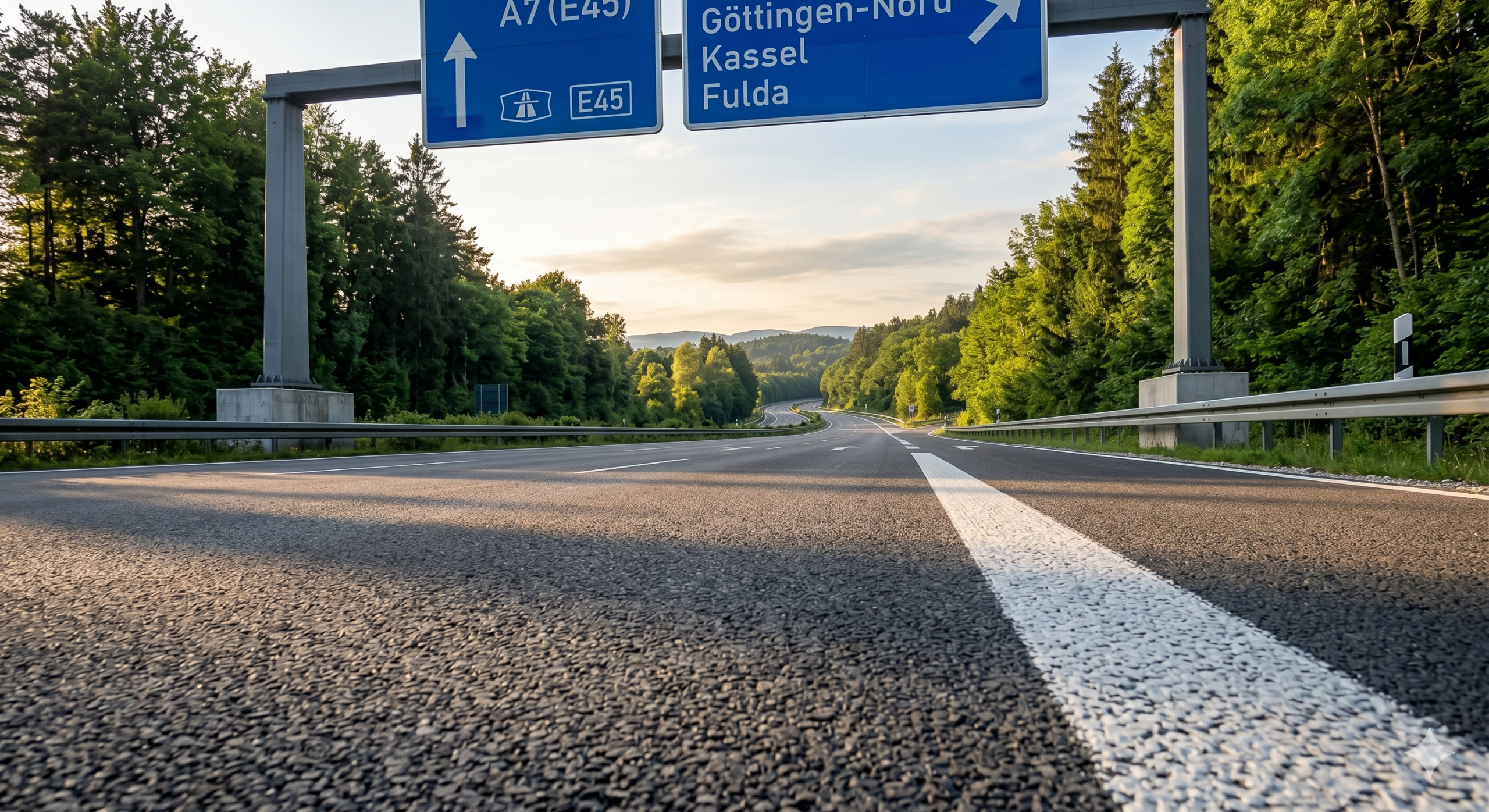
You’ve done all the research, booked the rental car, and landed in Germany — then realized the road signs look nothing like what you’re used to. Or maybe you’re a German visitor hitting an American interstate for the first time and wondering why everyone’s doing 80 mph in the left lane. Either way, you’re not wrong: the two countries share a lot of asphalt, but the rules — and the driving culture — are a world apart.
The biggest traps aren’t the obvious ones. Most people know Germany has the Autobahn. Fewer know about the rescue lane rule, the tire regulations that changed in 2024, or the fact that Washington D.C. quietly banned right turns on red. Small gaps in knowledge can mean big fines — or worse, a dangerous moment on a road you don’t quite understand yet.
This guide breaks down every major difference between driving in Germany and the USA: speed limits, lane discipline, enforcement, right-of-way, tolls, winter rules, and practical tips for both Americans heading to Europe and Germans visiting the States.
Speed Limits in Germany vs the USA: What the Numbers Actually Mean
Germany’s Autobahn is famous for its unlimited sections — and yes, some stretches genuinely have no posted maximum speed. But “no limit” doesn’t mean no rules. Many Autobahn sections carry permanent or variable limits triggered by construction zones, weather, noise restrictions, or heavy traffic. Where no sign is posted, Germany uses a recommended speed (Richtgeschwindigkeit) of 130 km/h (81 mph) on motorways — and while exceeding it isn’t automatically a ticket, it can increase your civil liability in a crash.
The default speed limits in Germany when no signs are posted:
- 50 km/h (31 mph) in built-up areas (towns and cities)
- 100 km/h (62 mph) outside built-up areas for cars without trailers
- 130 km/h (81 mph) recommended on motorways
In the USA, limits are always posted and vary heavily by state and road type. Most interstate highways fall between 65–75 mph, though a stretch of Texas State Highway 130 holds the highest posted limit in the country at 85 mph. City streets usually cap at 25–35 mph. The key difference: in the USA, assume the limit changes every few miles. In Germany, assume a default rule applies when there’s no sign at all.
Lane Discipline: The Rule That Separates German Roads From American Ones
This is where the culture gap hits hardest. On the Autobahn, keep right unless overtaking is the rule — full stop. The left lane is a passing lane, not a cruising lane. Drivers move right immediately after passing, and traffic flows in a predictable, layered way that makes high-speed driving feel remarkably smooth. Passing on the right (called “rechts überholen”) is not how the system is designed to work at speed.
On American interstates, the pattern is looser. Faster traffic often flows in multiple lanes, left-lane cruising is common (even if technically illegal in many states), and local driving style varies wildly — calm in rural stretches, chaotic near major cities. If you bring European lane habits to the USA, you’ll be fine. If you bring American lane habits to the Autobahn, you’ll confuse and frustrate everyone around you quickly.
Germany also has a rule that many tourists have never heard of: the Rettungsgasse (rescue lane). When traffic slows to a standstill on motorways or out-of-town roads, drivers must immediately form a clear corridor through the middle of traffic — before sirens arrive. On a two-lane road, left lane moves left, right lane moves right. On wider roads, left lane moves left, all other lanes move right. Failure to form this corridor carries heavy fines. If you’re planning a road trip through Germany’s countryside, this rule is worth practicing mentally before you go.
Cameras, Fines, and How Enforcement Actually Works
Germany uses fixed radar cameras and mobile speed checks extensively — on highways, in towns, on ordinary rural roads. The consistency catches visitors off guard. If you speed through a town at 60 km/h in a 50-zone, there’s a reasonable chance a camera caught it. Fines are mailed to rental car companies, who pass them along to the renter.
In the USA, automated enforcement is a patchwork. Some cities and states use speed cameras and red-light cameras extensively. Others have banned or restricted them by law. The Governors Highway Safety Association tracks these laws by state, and the variation is significant. What’s normal in one city is illegal in the next state over. The practical rule: in Germany, assume consistent enforcement everywhere. In the USA, check what’s normal for the specific state you’re driving in.
Right-of-Way and Intersections: The Rule That Surprises Americans in Germany
At unsignalized intersections in Germany — meaning no stop sign, no signal, no yield sign — the default rule is “rechts vor links” (right before left): traffic coming from the right has priority. This applies everywhere from quiet residential streets to rural crossroads. Germans grow up knowing it instinctively. Most Americans have never encountered it.
In the USA, right-of-way at intersections is decided almost entirely by signage and signals. Traffic lights, stop signs, yield signs, and lane markings do the work. At four-way stops, the “first to arrive, first to go” principle applies (with small local variations). It’s intuitive if you grew up with it — and disorienting if you didn’t.
Roundabouts are one area where both countries mostly agree: vehicles already in the circle have priority, and in Germany, signaling when you exit is expected. In the USA, roundabouts are growing in number, particularly in newer developments, but many drivers still approach them hesitantly. Expect some stop-and-go confusion from other drivers, especially in suburban areas.
Right Turn on Red: Know the Rules Before You Drive in a New City
In Germany, turning right on red is generally not allowed unless there’s a specific green arrow signal at that intersection. Wait for the full green light. This is the default, and most intersections don’t have the exception.
In the USA, the situation is more complicated than most drivers realize:
- Most of the USA: Right turns on red are allowed after a complete stop, unless a sign prohibits it.
- New York City: Right on red is illegal citywide, except where a sign explicitly allows it.
- Washington D.C.: Beginning January 1, 2025, right turns on red are banned unless DDOT signage at that specific intersection permits it. Enforcement applies where “No Turn on Red” signs are posted, with a $100 fine for violations.
The D.C. rule catches a lot of Maryland and Virginia drivers who cross into the District without realizing the default has changed. If you’re driving in any major U.S. city, don’t assume the rules you know from the suburbs apply downtown.
Documents and Required Equipment: Germany Is More Specific
Both countries expect you to carry a valid driver’s license, vehicle registration papers, and insurance documentation. Germany also requires certain safety items in the car: a reflective warning vest, a warning triangle, and a first aid kit. These should already be in any properly equipped rental vehicle — but it’s worth confirming before you drive off the lot.
For non-EU/EEA visitors driving in Germany, your domestic license may be valid for short stays, but an International Driving Permit (IDP) is strongly recommended if your license isn’t in German or doesn’t comply with the 1968 Vienna Convention format. The IDP acts as a certified translation and removes ambiguity during police stops. You can get one through your country’s automobile association before you travel.
In the USA, requirements are simpler. Most visitors driving rental cars need their domestic license, rental agreement, and insurance details. Some states may ask for an IDP, but most accept foreign licenses without one for short visits.
Tolls, Emission Zones, and City Driving Rules
Germany currently charges no road toll for passenger cars on motorways or federal roads. Trucks pay a toll (Maut) on motorways and some federal highways, but if you’re renting a standard car, you won’t hit toll booths. This surprises many Americans, especially those used to toll roads across the Northeast, Florida, and Texas.
What Germany does have — and what catches tourists — are Umweltzonen (environmental/low emission zones) in many cities. To drive into these zones, your car needs an emissions badge (Umweltplakette) displayed in the windscreen. Rental cars typically have them already. If you’re driving your own vehicle or an older rental, verify before entering a city center. Fines for missing badges can hit fast.
Parking enforcement in German cities tends to be strict and quick — wardens work fast. In U.S. cities, enforcement varies more widely, but the general principle is the same: read the signs carefully, because the rules shift block by block.
Winter Driving in Germany: The Tire Rule That Changed in 2024
Germany’s winter tire requirement is weather-triggered, not calendar-based: winter tires are legally required whenever road conditions include black ice, packed snow, slush, or slippery frost. Driving on summer tires in those conditions isn’t just risky — it’s a violation that results in fines and can void your insurance.
Here’s the change that catches travelers off guard: since October 1, 2024, tires marked only with the “M+S” designation are no longer accepted as winter-capable. You now need the Alpine symbol / 3PMSF (three-peak mountain snowflake) marking for a tire to qualify. Most modern winter tires already carry this marking — but if you’re renting a car for a winter trip through Bavaria or the Black Forest, confirm your rental has properly certified tires before you leave the lot.
The USA has no federal equivalent to this rule. A few states have specific chain requirements on certain mountain roads in severe weather, but these are posted and situational — not a standing equipment requirement like Germany’s system.
Insurance and Rental Car Coverage: What to Check Before You Drive Off the Lot
Neither country makes this simple, and the stakes are different in each direction. Americans driving in Germany are covered by the rental company’s mandatory liability insurance, but that doesn’t touch medical costs if you’re in an accident — Germany’s healthcare is excellent, but you’ll still want a travel insurance policy with solid emergency medical and evacuation coverage, since your U.S. health plan likely won’t reach past the border. Germans and other visitors driving in the USA face the opposite problem: American liability minimums vary wildly by state, and a serious accident can outstrip the rental company’s base coverage fast. A travel insurance plan with trip interruption and medical coverage closes both gaps, and it’s worth buying before you land rather than scrambling after something goes wrong.
On the rental car itself, don’t assume your credit card has you covered. Many U.S. credit cards that offer collision damage waivers exclude international rentals, or exclude Germany specifically — check the fine print before declining the rental company’s coverage at the counter. In Germany, the standard rental insurance (Vollkasko) usually comes with a deductible that can run into four figures; paying a little more per day to zero it out is often worth the peace of mind on unfamiliar roads. In the USA, the rental company’s supplemental liability insurance is optional but closes the same gap for international visitors whose home insurance doesn’t extend abroad.
Frequently Asked Questions: Driving in Germany vs the USA
Which side of the road do Germans drive on?
Germany drives on the right side of the road, with the steering wheel on the left — same as the USA. Drivers visiting from the UK, Australia, or Japan will need to adjust, but Americans will feel immediately at home with the basic orientation.
Do I need an International Driving Permit (IDP) to drive in Germany?
Germany allows visitors from most countries to drive on their domestic license for short stays. However, an IDP is strongly recommended if your license isn’t in German or doesn’t follow the 1968 Vienna Convention format. The IDP removes any translation ambiguity at police stops and is easy to get through your country’s automobile club before you travel.
Is there really no speed limit on the Autobahn?
On some sections, yes — there’s no posted maximum. But many Autobahn stretches do have limits, including permanent restrictions and variable signs triggered by weather or construction. Even on unrestricted sections, 130 km/h is the recommended speed, and driving significantly above that can increase your liability in a crash.
What is the Rettungsgasse and when do I need to use it?
The Rettungsgasse is an emergency rescue lane that drivers must form whenever traffic comes to a standstill on a motorway or out-of-town road. Move left if you’re in the leftmost lane; move right if you’re in any other lane. The corridor must be formed immediately — don’t wait for sirens. Failure to form one carries steep fines and is taken seriously by German traffic enforcement.
Can I turn right on red in Germany?
No — not as a general rule. In Germany, turning right on red requires a specific green arrow signal at that intersection. Without that arrow, you wait for the full green light. This is the opposite of what most American drivers are used to, so it takes conscious adjustment in the first few days of driving.
Are there tolls in Germany for rental cars?
No — passenger cars currently pay no road toll on German motorways or federal roads. Trucks pay a distance-based Maut, but you won’t hit a toll booth in a rental car. Germany’s costs to watch instead are parking, low-emission zone requirements, and fuel (which runs significantly higher than U.S. prices).
What does the M+S tire marking mean for winter driving in Germany?
M+S (Mud and Snow) was previously accepted as a winter tire designation, but since October 1, 2024, it no longer qualifies on its own. You now need the Alpine/3PMSF snowflake symbol on your tires to legally drive in winter road conditions. Most rental cars in Germany will already have properly marked tires, but confirm it for any winter travel — especially in mountain regions or Bavaria.
How does right-of-way at intersections work differently in Germany?
At unsigned intersections in Germany (no signal, no stop sign), traffic from the right has priority — this is the “rechts vor links” rule. Americans should be especially careful in residential neighborhoods and rural crossroads where this default applies and there are no painted lines or signals to rely on.
Is it safe to drive in Germany in winter?
Generally yes — roads are well maintained and major routes are cleared quickly. The critical requirements are proper winter tires (with the 3PMSF marking) and adjusting your speed for conditions. The Autobahn can still be driven in winter, but many sections have variable speed limits that drop significantly when conditions are poor. Check road condition reports (Verkehrsmeldungen) before setting out on long drives.
What’s the biggest mistake American drivers make on the Autobahn?
Camping in the left lane. Americans are used to multi-lane highways where the left lane is just the “fast lane” — but on the Autobahn it’s strictly for overtaking. Once you’ve passed a slower vehicle, move right. Staying in the left lane blocks traffic, frustrates local drivers, and can result in a fine. It also disrupts the flow of high-speed traffic in ways that create real safety risks.
Final Thoughts on Driving in Germany vs the USA
Germany rewards precision. Lane discipline, right-of-way defaults, tire regulations, and consistent camera enforcement mean the rules aren’t suggestions — they’re baked into how traffic actually flows. The USA rewards flexibility: posted signs make most decisions for you, enforcement varies widely by location, and local driving culture can swing from laid-back to intense depending on the city.
Before you drive in either country, spend 30 minutes reviewing the rules that don’t match what you’re used to. For Germany: the Rettungsgasse, rechts vor links, tire requirements, and lane discipline. For the USA: variable speed limits, right-on-red exceptions in D.C. and NYC, and state-by-state camera laws. The research takes less time than it would take to contest a fine.
If you’re planning a driving trip through Germany, our Heidelberg travel guide is a great starting point — it’s one of Germany’s most rewarding cities to arrive at by car, and well worth building a route around.
Recent Posts
Frankfurt Airport Layover Guide: What to Do With 6–24 Hours (2026)
Frankfurt Airport (FRA) is Europe's fourth-busiest airport, which means the odds of getting routed through it on your way to Prague, Nairobi, or Bangkok are pretty good — and so is the chance...
You're staring at a scooter accident video on TikTok, a headline about a missing tourist, and a friend's warning about "that Bali crime wave," and you're wondering: is Bali safe in 2026? Short...