
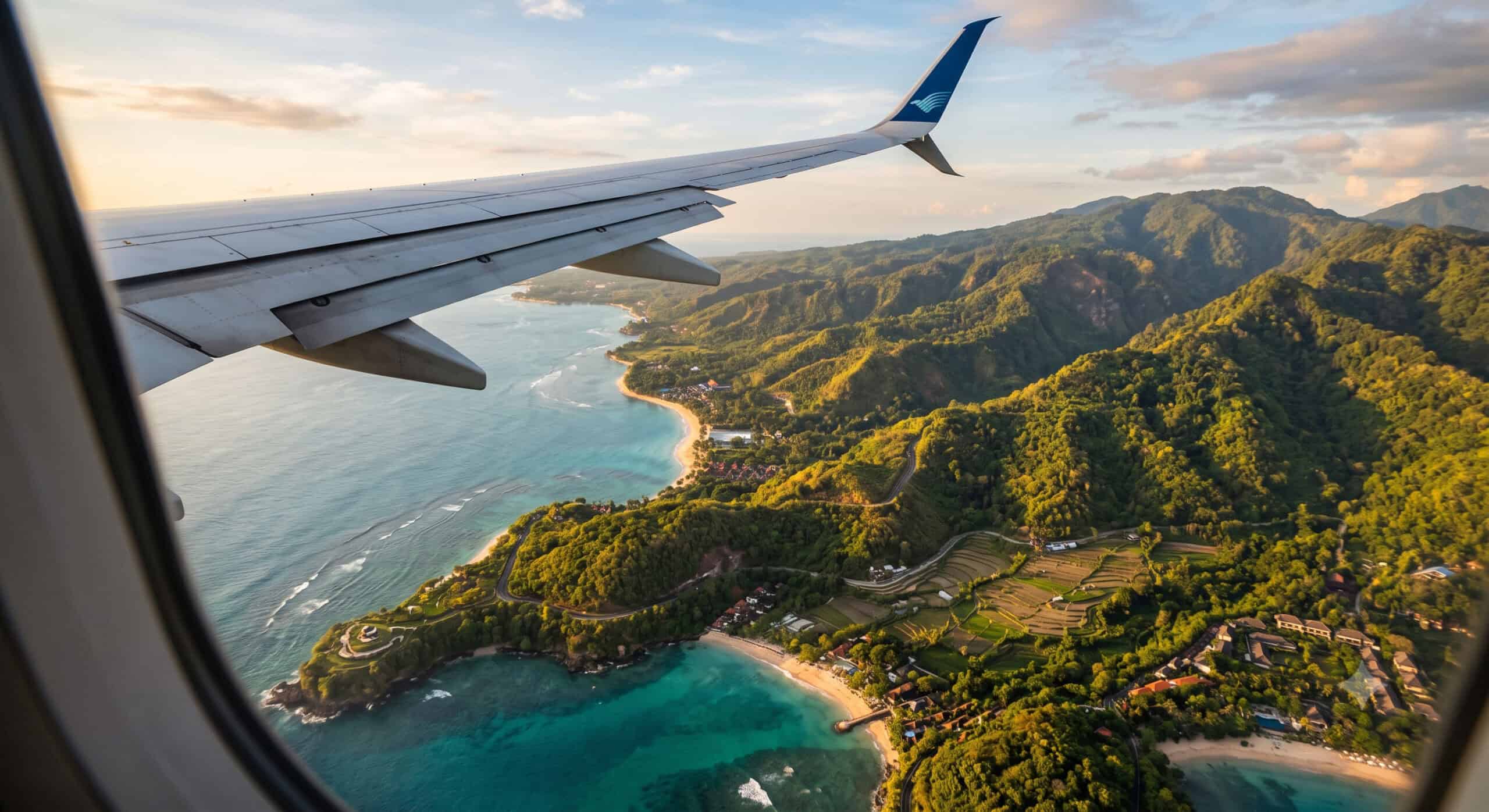
Somewhere around hour thirty of flying to Bali from the US, sitting in a plastic airport chair that was clearly never built for sleep, I had one thought on repeat: there has to be a smarter way to do this. There is, and it has almost nothing to do with shaving minutes off the flight itself.
Nobody flies to Bali the way they fly to Cancun. It’s a long trip no matter how you slice it, but the gap between a smooth arrival and a genuinely rough one usually comes down to three decisions: which hub you connect through, which airline handles the long-haul leg, and whether you’ve squared away Indonesia’s entry paperwork before you land at Denpasar. Here’s what actually works in 2026, including the visa costs and arrival steps that trip up a lot of first-time visitors.
There’s Still No Nonstop Flight From the US to Bali
As of 2026, no US airport offers a nonstop flight to Denpasar (DPS). That hasn’t changed in years, and nothing on the major booking engines suggests it’s coming soon. Plan on at least one stop, and often two, depending on where you’re departing from.
That’s not entirely bad news. A layover, chosen well, becomes your secret weapon: a chance to break up a brutal travel day in an airport that’s actually comfortable, on an airline that treats a stopover like part of the trip instead of a formality. The route you pick matters more than people give it credit for.
The Best Flight Routes From the US to Bali
Nearly every itinerary from the US to Bali funnels through a major hub in East Asia or the Middle East before continuing on to DPS. Four hubs consistently produce the smoothest connections:
- Singapore (SIN) – excellent airport, strong airline options, easy connections
- Seoul (ICN) – efficient layovers and reliably good service
- Hong Kong (HKG) – a classic routing for West Coast departures
- Doha (DOH) – the most comfortable long-haul option from the East Coast
A common example: Los Angeles to Hong Kong to Bali runs somewhere in the low-to-mid 20-hour range total, depending on your layover length. From East Coast cities, plan on 24 to 30-plus hours once you account for a longer connection.
If your travel dates are flexible, it’s worth checking Bali’s best months to visit before locking anything in, since shoulder-season fares are often meaningfully cheaper than the peak summer rush, and the weather usually cooperates too.
Best Airlines for the Long-Haul Leg
You’ll see plenty of itineraries sold under US airline names, but the long-haul segment is often operated by an international partner. What matters is who’s actually flying the plane for the 15-plus-hour leg, not whose logo is on the ticket. These carriers show up again and again on US-to-Bali routings, and for good reason:
- Singapore Airlines (often via Singapore)
- Korean Air (often via Seoul)
- Cathay Pacific (often via Hong Kong)
- Qatar Airways (often via Doha)
- EVA Air (often via Taipei)
- Emirates (often via Dubai)
When two itineraries are priced similarly, my rule is simple: pick the one with the better connection airport and fewer total hours in transit. Your trip effectively starts the moment you stop being miserable, not the moment you land.
How to Survive (and Maybe Enjoy) Your Layover
A long layover can wreck a trip or quietly save it. The difference is mostly planning. As a rough guide, 2 to 4 hours gives you enough buffer to handle a delay without turning into a second trip, while 6 to 10 hours is only worth it if the airport itself is a good one, or if you’re planning to actually leave and explore.
Doha is a standout for this. Qatar Airways markets a Stopover program that turns a long connection into a short add-on trip, and Hamad International has an actual transit tour desk if you’d rather book something in person. Some Brunei routings offer a similar stopover option through Royal Brunei Airlines, aimed at breaking up the same long haul.
One booking rule that saves people real grief: avoid self-transfer itineraries, meaning separate tickets on separate airlines, unless you fully understand the risk. If your first flight runs late, nobody is obligated to rebook you onto the second one.
What to Handle Before You Land in Bali
Bali’s entry process is genuinely manageable, but it rewards people who do the paperwork ahead of time instead of on airplane WiFi somewhere over the Pacific.
Passport: Indonesia expects at least 6 months of validity remaining, plus evidence of a return or onward ticket.
Visa: most US travelers use the e-VOA, the electronic Visa on Arrival. It costs IDR 500,000, covers a 30-day stay, and can be extended once for another 30 days at the same cost, for a maximum of 60 days total. Apply through Indonesia’s official immigration eVisa portal, and steer clear of copycat sites that charge more.
Tourist levy: Bali also charges a one-time tourist levy of IDR 150,000 per person, payable through the official Love Bali portal before you arrive or at a payment counter on-site. This fee is separate from your visa cost.
Arrival card and customs: Indonesia now uses a consolidated digital arrival card that generates a QR code after you fill in your details online, plus a separate electronic customs declaration. Screenshot both QR codes before you land, in case you lose signal at the airport.
One more thing worth knowing: Indonesia treats drug offenses with genuine severity, including penalties far beyond what most US travelers expect, and some medications that are legal at home aren’t legal there. Keep prescriptions documented and don’t take chances.
Money, Data, and Getting a Ride From DPS
Airport currency exchange counters exist, but the rates are rarely good. If you’re planning to use an ATM instead, tell your bank you’re traveling first, since unannounced Indonesian withdrawals get flagged more often than you’d expect.
Data matters almost immediately, mostly because you’ll need WhatsApp for your driver, your villa, and pretty much every tour operator on the island. Our Bali SIM and eSIM guide breaks down whether to buy a physical SIM at the airport or set up an eSIM before you leave, and it’s worth reading on the plane if you haven’t sorted it yet.
For the ride itself, pre-arranging pickup through your hotel or villa is the least stressful option after a 20-plus-hour travel day — it’s a straight line from arrivals to a car to a shower. Grab and Gojek both operate in Bali, but airport pickups route through a designated area that isn’t always obvious when you’re jet-lagged, so budget a few extra minutes to find it. If you haven’t settled on where to stay yet, our breakdown of Bali’s best neighborhoods can help you match your accommodation to the kind of arrival you want.
Your First Day in Bali After a Long Flight
Once you’re through arrivals, there are really two directions people go on day one. Option A is the reset button: a massage, straightforward and inexpensive, that undoes some of the stiffness from 20-plus hours in economy before you do anything else. Option B is a sunset and something cold, a Bintang on the beach while you let the trip settle. Neither is wrong.
If you’re heading somewhere temple-adjacent in the next day or two, it’s worth a quick look at what to actually wear in Bali so you’re not scrambling for a sarong at the entrance. And if you’re traveling with kids, or just want a low-effort first outing, Bali’s best family-friendly activities is a decent place to start once the jet lag clears.
Frequently Asked Questions About Flying to Bali
How long is the flight from the US to Bali?
There’s no nonstop option, so total travel time depends heavily on your route. Most West Coast itineraries land in the low-to-mid 20-hour range including the layover. East Coast trips typically run 24 to 30-plus hours, especially with a longer connection.
Which airline is best for flying to Bali?
There’s no single right answer — it depends on whether you’re optimizing for price, comfort, or routing. Most experienced travelers prioritize whichever airline operates the long-haul segment and pick the itinerary with the fewest total hours and the best connection airport.
Do US citizens need a visa to visit Bali?
Yes. Most US travelers use the e-VOA, which costs IDR 500,000, covers 30 days, and can be extended once for another 30 days. It’s applied for online through Indonesia’s official immigration portal before or on arrival.
What is the Bali tourist tax, and is it mandatory?
It’s a one-time levy of IDR 150,000 per person, separate from your visa fee, paid through the official Love Bali portal or at a payment counter on arrival. It’s mandatory for foreign tourists and only collected once per visit.
Is there a direct flight from the United States to Bali?
Not currently. As of 2026, no US carrier or partner airline flies nonstop to Denpasar, so every itinerary includes at least one connection, typically through Singapore, Seoul, Hong Kong, or Doha.
Get the flight and the paperwork right, and the hardest part of the trip is already behind you before you’ve even seen the ocean. Everything after Denpasar — the rice terraces, the surf breaks, the first bowl of nasi goreng — tends to take care of itself.
Recent Posts
Frankfurt Airport Layover Guide: What to Do With 6–24 Hours (2026)
Frankfurt Airport (FRA) is Europe's fourth-busiest airport, which means the odds of getting routed through it on your way to Prague, Nairobi, or Bangkok are pretty good — and so is the chance...
You're staring at a scooter accident video on TikTok, a headline about a missing tourist, and a friend's warning about "that Bali crime wave," and you're wondering: is Bali safe in 2026? Short...