
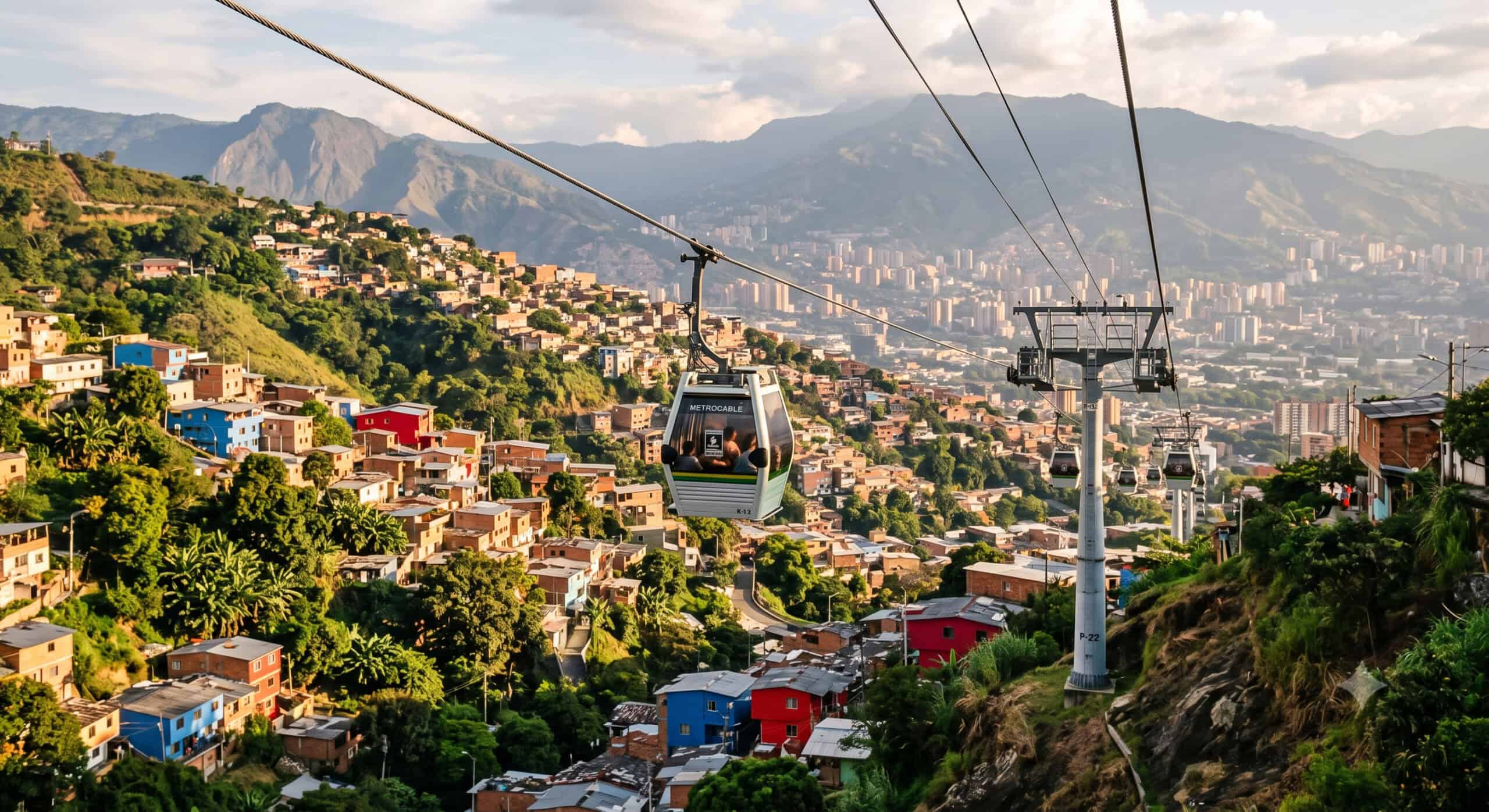
Medellín rewards the traveler who pays attention. Sunny afternoons in Laureles, sunset views from a Metrocable car, a coffee run that turns into an hour-long conversation with a stranger—the city delivers all of it. Getting around Medellín safely just takes the same street sense you’d use in any big city, plus a handful of local habits: use apps instead of hailing rides off the street, keep a little cash on hand, and yes, close the taxi door gently (locals really do notice).
Colombia still sits at a Level 3 “Reconsider Travel” advisory from the U.S. State Department, last updated in March 2026, and street crime is a documented issue in Medellín along with other major Colombian cities. That’s not a reason to skip the trip. It’s a reason to move around with intention, which is exactly what this guide walks you through: taxis, ride-hailing apps, the Metro, motorbike rides, renting your own wheels, and the airport transfer that starts your trip off right.
How Safe Is Medellín, Really?
Most travelers who have a great trip in Medellín follow a short list of habits: they use apps for rides after dark, they know their destination and neighborhood before they leave, and they stay aware in crowds. The advisory language sounds alarming out of context, but it mirrors what you’d hear about plenty of major cities—awareness matters more than paranoia.
A few habits make an outsized difference. Keep your bag in front of you on crowded transport. Don’t flash a phone or jewelry on a busy sidewalk. Avoid wandering alone, especially late and especially after a few drinks. Download offline maps before you head out, since spotty signal in some neighborhoods can turn a wrong turn into a stressful one. None of this is unique to Colombia—it’s the same playbook that works in Barcelona, Rio, or New York.
Taxis: Your Easiest Default
Taxis are everywhere in Medellín, and for short hops, evenings, or rainy days, they’re often the simplest option. Have your destination ready as an address, a neighborhood name, and ideally a map pin you can show the driver—it saves time and avoids the awkward pointing-and-hoping routine.
Carry small bills when you can; breaking a large note slows everything down and can annoy a driver who’s been making change all day. And yes, be gentle with the door. It sounds like a throwaway tip, but Medellín taxi drivers genuinely care about their cars, and slamming the door is one of those small things that marks you as a tourist who didn’t do their homework.
On pricing: skip trying to memorize a “typical fare” in pesos, because the peso has moved quite a bit lately. The Colombian peso strengthened noticeably through mid-2026, and USD/COP has traded in the roughly 3,200–3,400 range this July, down from averages well above 3,600 earlier in the year. Rather than doing mental math on an unfamiliar currency, pull a quote from a ride app or ask your hotel what’s normal for your route. If you’re deciding which neighborhood to base yourself in before you land, our guide to the best places to stay in Medellín breaks down El Poblado, Laureles, and Envigado by vibe and safety.
Ride-Hailing Apps: Uber, Cabify, and the Legal Gray Zone
Medellín is an app-friendly city, and that’s good news for travelers who’d rather avoid a language mix-up over an address. Ride apps let you track your route, share trip details with someone back home, and skip a cash transaction if you want to.
Uber’s status in Colombia is worth understanding before you rely on it. Colombia’s Supreme Court ruled in 2023 that Uber’s use of technology alone didn’t amount to unfair competition, which let the platform keep operating—but it still functions through a vehicle-rental-with-driver workaround rather than a formally regulated rideshare license. In practice, that means Uber is widely used and generally reliable in Medellín, but drivers sometimes ask riders to sit in the front seat so the car looks more like a private ride than a commercial one. It’s not a rule, just a habit worth going along with if asked.
Cabify also operates in Medellín and is a solid backup when Uber surges or you want something closer to a traditional taxi experience booked through an app. You’ll also see DiDi and inDrive in circulation, and which one is fastest can shift by neighborhood and time of day—having two apps installed keeps you flexible.
Whichever app you use, match the license plate and driver name to what’s on your screen before getting in, wait in a well-lit spot for pickup, and don’t hesitate to cancel and reorder if something feels off. No explanation needed.
Picap: The Motorcycle Hack Solo Travelers Love
If you’re traveling alone or you just want to beat traffic, Picap is the local favorite: an app-based motorcycle taxi service that’s fast, cheap, and genuinely useful in a city where cars can crawl during rush hour. It’s particularly good for short hops when you don’t want to sit in congestion for a ride that should take five minutes.
The trade-offs are real, though. Always wear the helmet you’re given—don’t treat it as optional. Skip Picap in heavy rain or when roads look slick, and don’t try to bring a large suitcase along for the ride. Keep your phone tucked away rather than held out while riding. Some drivers take cash, others accept in-app payment, so having a little cash on hand keeps things simple either way.
Metro, Metrocable, and the Cívica Card
Medellín’s public transportation system is one of the city’s genuine points of pride, and it’s worth using even if you’re not on a budget—the Metrocable ride alone is one of the best views in the city. You’ll need a Cívica card to ride, and visitors typically use the “Eventual” tourist version: a one-time card cost of roughly 10,900 COP, with per-trip fares currently around 4,400 COP on Metro, Metrocable, the Ayacucho Tram, and connecting Metroplús routes. Fares get adjusted periodically, so check the official Cívica tariff page before you travel if exact pricing matters to your budget.
The Metrocable is more than a commute—it’s a cable car that climbs out of the valley toward neighborhoods like Santo Domingo, with routes connecting toward the Arví area for travelers who want a half-day outside the city center.
On safety: public transit in Medellín is generally fine, but crowded platforms and cars are where petty theft happens in any city on earth. Wear your bag in front on busy trains, keep zippers closed, and don’t scroll your phone absentmindedly near the doors as they open at a station. If a car looks uncomfortably packed, let it go and wait three minutes for the next one.
Airport Transfers, Staying Connected, and the Habits That Actually Matter
Arriving at José María Córdova International Airport (MDE) is the first test of your travel instincts, and it’s not the place to save a few pesos by improvising. Use the official taxi stand in the designated pickup area, or arrange a transfer through your hotel or host in advance. If you haven’t locked in your flight yet, our guide to flying to Medellín from the United States covers airlines, routes, and what to expect on arrival.
Once you’re settled, data makes everything easier—maps, ride apps, translation, WhatsApp. Google Fi still covers Colombia, but it’s built for short trips: use it abroad for an extended stretch and Fi will eventually warn you, then suspend international data. If you’re staying more than a couple of weeks, a local SIM or eSIM from a Colombian carrier is the better call, and your host or hotel can usually tell you which carrier has the best signal in your specific neighborhood.
Layer on the basics that matter everywhere: don’t wander alone late at night, don’t accept anything from a stranger you didn’t order yourself, keep your phone and wallet secured in crowds, and leave if a situation feels off rather than waiting to see how it plays out. Medellín will still be there tomorrow. For more Colombia planning help, our full Colombia travel guide collects our other Medellín and Colombia posts in one place.
FAQ
Is Medellín safe for tourists?
Medellín can be a genuinely wonderful place to visit, but the U.S. State Department’s Level 3 “Reconsider Travel” advisory reflects real street crime risk in major Colombian cities, Medellín included. Most travelers who have a smooth trip stick to reliable transport, stay aware in crowds, and avoid risky situations late at night.
Is Uber legal in Medellín?
Uber operates legally in Colombia following a 2023 Supreme Court ruling, though it works through a vehicle-rental-with-driver structure rather than a dedicated rideshare license. It’s widely used and considered reliable by both locals and travelers.
How much does a taxi cost in Medellín?
Fares depend on distance, traffic, and time of day, and the exchange rate has shifted meaningfully in 2026, so a fixed dollar estimate goes stale fast. Get a quote through a ride app or ask your hotel what’s typical for your route rather than relying on an old number.
Do I need cash in Medellín?
Yes, at least some. Many everyday situations—small taxi fares, Picap rides, street food—still run more smoothly with cash on hand, even though cards and app payments are increasingly common in tourist areas.
What’s the easiest way to get around without stress?
For most visitors, Metro by day and ride apps at night covers nearly everything. Add Picap for quick solo hops if you’re comfortable on a motorcycle, and lean on taxis whenever you’d rather not think about it.
Getting around Medellín safely really comes down to using the tools built for exactly this: apps that track your ride, a Metro system locals are proud of, and a little common sense about when to slow down. Do that, and the city opens up fast—coffee in Laureles, sunset from the Metrocable, and a lot fewer stressful moments than you expected.
Recent Posts
Frankfurt Airport Layover Guide: What to Do With 6–24 Hours (2026)
Frankfurt Airport (FRA) is Europe's fourth-busiest airport, which means the odds of getting routed through it on your way to Prague, Nairobi, or Bangkok are pretty good — and so is the chance...
You're staring at a scooter accident video on TikTok, a headline about a missing tourist, and a friend's warning about "that Bali crime wave," and you're wondering: is Bali safe in 2026? Short...