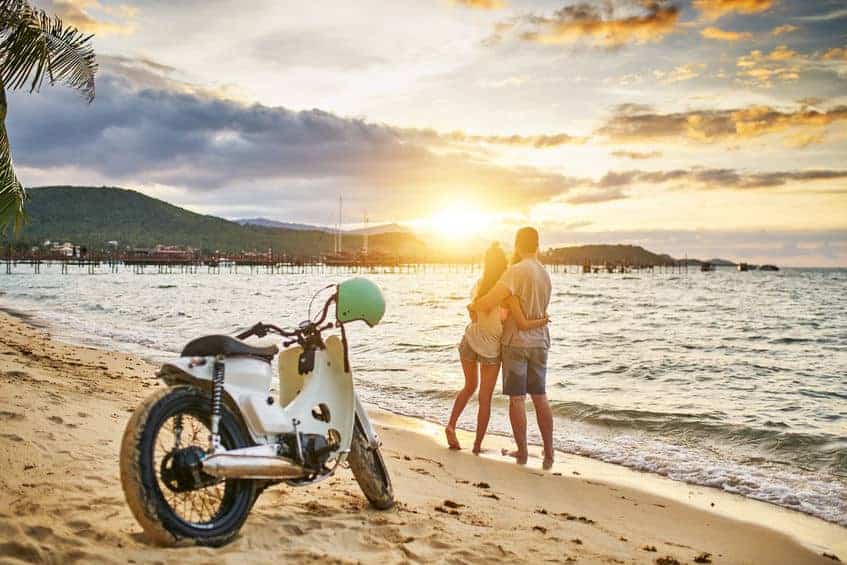
Thailand is famous for its beaches and big-city buzz—but the real magic often starts the moment you turn onto a quiet backroad, roll past rice fields and mountain ridgelines, and realize you’ve got the day’s adventure entirely in your hands. If you’re craving freedom, surprise viewpoints, and small-town culture you can’t “tour-bus” your way into, a motorcycle road trip through Thailand can be unforgettable.
This updated guide covers what to know before you ride: safety realities, license and insurance essentials, route ideas for different skill levels, and a handful of standout stops (all verified as operating as of early 2026).
Before You Go: Who Should (and Shouldn’t) Do a Thailand Motorbike Trip?
A Thailand motorcycle road trip is a great fit if you:
- Have real riding experience (especially on curves, hills, and wet pavement)
- Can stay calm in unpredictable traffic
- Enjoy flexible plans and slower travel
- Are willing to prioritize safety over “keeping up” with other riders
You should skip riding (or switch to a car/driver) if you:
- Haven’t ridden recently, or only rode scooters a couple times on vacation
- Want to ride at night (not recommended)
- Feel pressure to “wing it” without proper licensing/coverage
Thailand is incredibly welcoming—but the roads can be fast-moving, chaotic, and full of surprises. The best trip is the one where you finish every day tired, happy, and uninjured.
Safety First: How to Ride Smart on Thailand’s Roads
Think of Thailand as a place where you ride assuming the unexpected will happen… and then it still surprises you (in a charming way, off the bike—and a less charming way, on it).
Your non-negotiables
- Wear a helmet—every ride. Thailand has tightened helmet enforcement, with fines that can reach 2,000 THB for violations, and this applies to both riders and passengers.
- Avoid night riding. Visibility drops, road hazards multiply, and tiredness sneaks up on you.
- Slow down in rain. Painted lines, metal plates, and puddles can be slick.
- Ride “invisible.” Assume drivers don’t see you. Give space. Don’t linger in blind spots.
- Take breaks often. Heat + dehydration + adrenaline is a sneaky combo.
A simple riding mindset that works
- Ride defensively, not aggressively
- “Smooth” beats “fast”
- If the road feels sketchy, pull over, breathe, and reset
Licenses in Thailand: What You’re Legally Required to Have
Thailand’s rules here are straightforward, and they matter: to drive (car or motorcycle) as a visitor, you generally need an International Driving Permit (IDP) along with your passport and your home license. สถานเอกอัครราชทูต ณ กรุงลอนดอน+1
Two key details riders miss:
- Your IDP must cover motorcycles (not just cars). If your home license doesn’t include a motorcycle entitlement, your IDP won’t either.
- Licensing can affect insurance coverage. Even if a rental shop hands you keys, an insurer may deny claims if you weren’t properly licensed for the vehicle class.
If you’re unsure, treat this as a must-fix before you fly: get properly endorsed at home and obtain the right IDP.
Insurance and Healthcare: Don’t “Hope” Your Way Through This Part
A motorbike trip is not the moment to gamble on “I’ll be careful.” You want coverage you understand.
What to look for in travel insurance
- Medical coverage that explicitly includes motorcycling
- Coverage that aligns with engine size (some policies restrict larger bikes)
- Clear requirements around helmet use and licensing/IDP
- A straightforward emergency/claims process
SafetyWing is one example of a company that continues to offer travel medical coverage products (they are active as of early 2026). SafetyWing
That said, any insurer can have exclusions—so the real win is choosing a policy that matches how you’ll ride and keeping your documents in order.
In an emergency: numbers worth saving
- 191 (general emergency)
- 1669 (ambulance)
- 199 (fire)
- 1155 (Tourist Police—helpful for travelers/language issues)
Best Time of Year for a Thailand Motorcycle Road Trip
Thailand’s seasons are usually described as:
- Cool season: roughly Nov–Feb
- Hot season: Mar–May
- Rainy season: May–Nov
For most riders, cool season is the sweet spot: better visibility, more comfortable temperatures, and less weather drama.
A special note for Northern Thailand: many travelers try to avoid peak “burning season” conditions (often worst around March–April) due to smoke/haze. South East Asia Backpacker
Renting vs. Buying a Bike: What Actually Saves Money?
Renting (best for most travelers)
Ideal if your trip is under ~2–3 weeks, you want minimal hassle, or you’re changing regions (North → Islands).
Rental checklist
- Photograph the bike from all angles before you leave
- Test brakes, lights, horn, tires, and mirrors
- Confirm what happens if you get a flat (common!)
- Keep a copy of your rental agreement
- Don’t hand over your passport as collateral—walk away if a shop insists
Buying (can be cost-effective for longer trips)
If you’re staying longer, buying can work if you’re comfortable with:
- paperwork/logistics
- resale timing
- basic maintenance realities
For many visitors, renting wins on simplicity—and simplicity is safety.
The Best Motorcycle Road Trips in Thailand (Route Ideas)
Below are some of Thailand’s most rewarding motorcycle routes, with options for different timeframes and comfort levels.
1) The Mae Hong Son Loop (Northern Thailand’s iconic ride)
Best for: confident riders who love mountains and curves
Time needed: 4–7 days (more is better)
Vibe: twisty roads, misty viewpoints, hot springs, small towns
This loop is widely known as one of Thailand’s classic rides, often described as 600+ km of mountain riding. This Remote Corner
Common route flow: Chiang Mai → Pai → Mae Hong Son → Mae Sariang → back to Chiang Mai
Tips that make it better
- Start early each day for cooler temps and clearer skies
- Plan shorter riding days than you think you need
- Treat Pai as a fun stop—but don’t rush the scenic sections just to “arrive”
2) The Samoeng Loop (Chiang Mai’s “short-but-satisfying” ride)
Best for: beginners (with real riding experience) or anyone short on time
Time needed: half-day to full day
Vibe: easy countryside, quick mountain views, café stops
This is a great “warm-up ride” before committing to bigger northern routes. Keep speeds relaxed, pull over often, and use it to get comfortable with local traffic rhythm.
3) Chiang Mai → Chiang Rai → Golden Triangle (a culture + scenery combo)
Best for: riders who want temples, tea/coffee country, and scenic highways
Time needed: 3–5 days
Vibe: rolling hills, viewpoints, cultural stops, relaxed pacing
This route shines if you like mixing riding with short hikes, markets, and slow lunches. It’s also easier to tailor: you can do it as a loop or a point-to-point.
4) Isaan Detour: Udon Thani + the “Red Lotus Sea” (Talay Bua Daeng)
Best for: travelers who want something different from the usual Thailand circuit
Time needed: 2–4 days (more if you explore deeper Isaan)
Vibe: local Thailand, fewer crowds, early-morning nature spectacle
Talay Bua Daeng (often called the Red Lotus Sea / Red Lotus Lake) is most famous during the blooming season, typically late Dec–Feb, especially in the morning hours. That One Point of View
Local boat tours continue to operate, with typical pricing posted at 300 THB for small boats and 500 THB for larger boats (as of early 2026). talaybuadaeng.com
Rider tip: make this an early bedtime night—sunrise starts come fast, and that’s when the lake is most magical.
5) Bangkok → Pattaya (with a standout cultural stop)
If you find yourself near Pattaya, The Sanctuary of Truth is a jaw-dropping wooden temple complex and a worthy detour. It’s verified open daily, with daytime and nighttime tour windows listed on its official site. sanctuaryoftruthmuseum.com
Even if you’re not usually a “museum/architecture” traveler, this one tends to convert people.
Budgeting Your Thailand Motorcycle Trip (Realistic Costs)
Costs vary by region, bike size, and season, but your budget usually breaks into:
- Bike rental or purchase/resale
- Fuel (generally manageable, but distance adds up fast in the mountains)
- Accommodation (guesthouses are plentiful in riding areas)
- Food (excellent and affordable—hydrate often)
- Insurance + safety gear
- Park/attraction entry fees
A smart money move: spend more on safety (helmet, gear, insurance) and less on “rushing.” Slow travel is often the cheapest travel.
What to Pack for a Motorcycle Road Trip in Thailand
Comfort + safety essentials
- Lightweight riding jacket (ideally with armor)
- Gloves (seriously—hands hit first)
- Closed-toe shoes
- Rain layer (even in dry season, weather happens)
- Sunglasses + clear glasses (day/night visibility changes)
- Small first-aid kit + antiseptic wipes
- Phone mount + offline maps
- Copies/photos of your passport, license, and IDP
FAQs (Updated for 2026)
Is it safe to drive a motorbike in Thailand?
It can be—if you ride defensively, wear a helmet, avoid night riding, and don’t exceed your skill level. Thailand has increased helmet enforcement nationwide, with fines up to 2,000 THB for noncompliance, which is a good clue that authorities are taking safety more seriously.
Do I need an International Driving Permit (IDP) to ride in Thailand?
In general, yes—Thailand’s official guidance for visitors states you’re required to hold an international driving license/permit and present it with your passport and national license when asked. สถานเอกอัครราชทูต ณ กรุงลอนดอน+1
What’s the best motorcycle road trip route in Thailand?
If you want iconic mountain riding, it’s hard to beat the Mae Hong Son Loop (600+ km of northern scenery). This Remote Corner
If you want a shorter “sampler,” try a day loop outside Chiang Mai (like Samoeng) to get comfortable first.
What are the best cities to base yourself for riding?
- Chiang Mai: the classic gateway to northern loops
- Chiang Rai: great for Golden Triangle-style routes
- Udon Thani: a strong base for Isaan exploration and Talay Bua Daeng day trips
What should I do if something goes wrong on the road?
Save these before you ride: 191 (emergency), 1669 (ambulance), and 1155 (Tourist Police).
Final Thoughts: Thailand Is Even Better at “Road Speed”
A motorcycle road trip in Thailand isn’t just transportation—it’s a front-row seat to the country’s everyday beauty: morning markets, mountain fog lifting off the road, roadside noodle shops, and quiet stretches where you feel like you discovered Thailand for the first time.
Plan carefully, ride conservatively, and leave space in your itinerary for the unplanned moments. That’s where the best memories usually hide.
As an experienced traveler in Thailand, I’ve navigated the country’s diverse landscapes and road conditions, offering firsthand insights into safe and rewarding motorcycle adventures.