
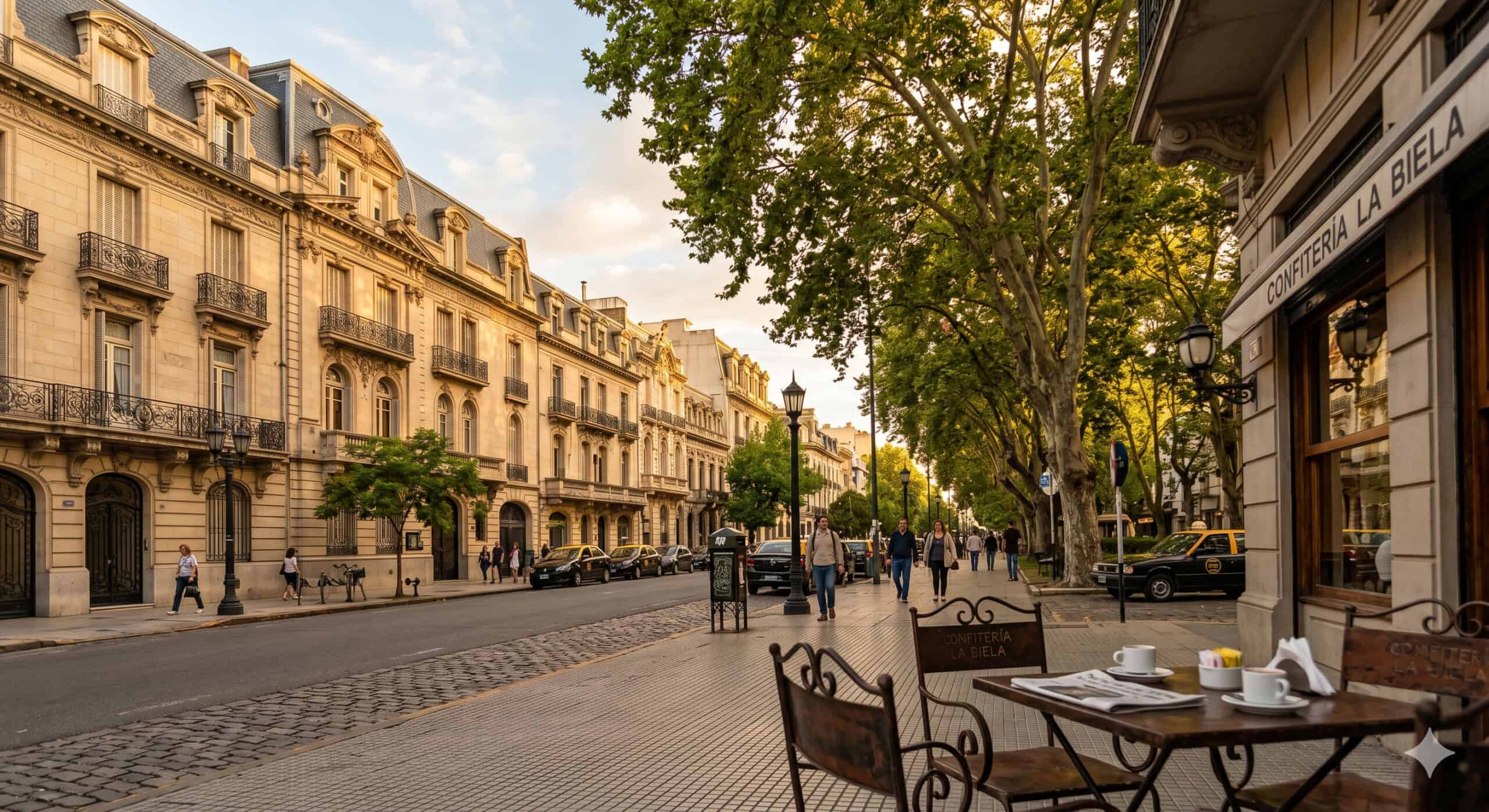
Buenos Aires rewards travelers who pick the right neighborhood. Nail that decision and everything else — the late dinners, the long walks, the spontaneous wine-bar detours — tends to fall into place naturally. The city’s best hotels in Buenos Aires are spread across six very different barrios, each with its own rhythm. Below is the breakdown: which neighborhood fits your trip, and the specific hotel I’d book in each one.
Quick Neighborhood Picker
- Recoleta — Classic, walkable, museums, sidewalk cafés, old-money Buenos Aires
- Palermo — Restaurants, wine bars, nightlife, boutique hotels, parks
- San Telmo — Cobblestones, antiques, tango, colonial atmosphere
- Belgrano — Residential, calm, local shopping, good for longer stays
- Puerto Madero — Modern, waterfront, upscale, quiet evenings
- Microcentro / Retiro — Central sightseeing, iconic landmarks, best for short trips
1. Recoleta: Old-World Buenos Aires at Its Best
If you close your eyes and picture Buenos Aires — the wide boulevards, the ornate buildings, the sidewalk café where people linger over coffee for two hours — you’re probably picturing Recoleta. It’s the neighborhood that leans hardest into the city’s European side, and it pulls it off without feeling like a museum piece. The streets are clean, the parks are well-kept, and everything feels unhurried in a way that’s hard to find in the other barrios.
Practically speaking, Recoleta is one of the most walkable areas in the city. The Recoleta Cemetery — a nationally protected open-air mausoleum with dozens of tombs listed as National Historical Monuments with genuinely stunning architecture — can easily eat a morning on its own. The Museo Nacional de Bellas Artes is a five-minute walk from the cemetery gates, and Café La Biela, a neighborhood institution since 1850, sits nearby for a proper coffee break afterward. For couples, first-timers, or anyone who wants Buenos Aires to feel polished and manageable, Recoleta is hard to argue against.
Hotel Pick: Esplendor by Wyndham Buenos Aires Plaza Francia
This is the hotel I’d book for a Recoleta stay. It’s positioned right in the heart of the neighborhood, within easy walking distance of the main sights, with modern design touches and solid amenities — breakfast included, reliable Wi-Fi, and the kind of service that doesn’t require you to figure anything out for yourself. It’s comfortable without being stuffy, which matches the neighborhood well.
Best for: first-time visitors, couples, museum lovers, travelers who want a refined neighborhood as their home base.
2. Palermo: Restaurants, Nightlife, and Boutique Hotels
Palermo is Buenos Aires in weekend mode, even on Tuesday. The coffee shops open early and the wine bars stay open very late, and in between there’s a full day of parrillas (steak houses), parks, independent boutiques, and street art to work through. It’s the neighborhood where the city’s energy is most concentrated, and most travelers who say they “loved Buenos Aires” probably mean they loved Palermo specifically.
For anyone planning to go out, Palermo is the right base. Most of the city’s best bars and clubs are here or within easy reach — see our full guide to Buenos Aires nightlife for specific venue picks and the timing you need to know (spoiler: things start much later than you’d expect). Palermo also splits into distinct sub-neighborhoods — Palermo Soho for shopping and cafés, Palermo Hollywood for restaurants and cocktail bars — both of which are walkable from most hotels in the area.
Hotel Pick: Palo Santo Hotel
Palo Santo is a boutique property with a design-forward feel and a greenery-focused identity that makes it feel calm even though it’s a short walk from everything you came to Palermo for. It’s a good match for travelers who want the neighborhood’s energy during the day and a quiet place to land at night. Stylish without being precious about it.
Best for: foodies, nightlife fans, boutique hotel travelers, anyone visiting Buenos Aires for the second time.
3. San Telmo: Cobblestones, Tango, and Atmosphere
For sheer atmosphere, San Telmo is in a different category from the rest of the city. The cobblestone streets, the colonial buildings, the antiques markets, the tango being danced in doorways — it all feels less like a neighborhood and more like a film set, except it’s completely real and has been like this for 150 years. This is Buenos Aires before it was renovated, and plenty of travelers prefer it.
The Sunday market at Plaza Dorrego is worth planning your weekend around — antiques, street food, live tango performances, and a crowd that’s about half local and half tourist in the best possible way. If you want to see a milonga (a social tango hall where regular people dance, not a dinner-show performance), San Telmo is where to start.
One practical note: like most historic city districts, some San Telmo streets are quieter after dark. It’s not a safety issue so much as a vibe shift — plan evenings around well-lit areas and use a rideshare app when heading home late.
Hotel Pick: L’Adresse Hotel Boutique
A small, character-rich boutique option that fits San Telmo well — intimate, comfortable, and well-positioned for exploring the neighborhood’s cobblestone streets without needing to commute from somewhere more modern. It’s widely listed on major booking platforms, which makes reviewing and reserving straightforward.
Best for: history lovers, antiques market fans, tango-curious travelers, anyone who wants atmosphere over amenities.
4. Belgrano: The Calm, Local Alternative
Belgrano is what Buenos Aires looks like when the tourist layer is pulled back. It’s a largely residential neighborhood with good shopping streets, leafy blocks perfect for morning runs, and a pace that doesn’t demand anything from you. If you’ve been to Buenos Aires before and found the tourist-heavy zones exhausting by day three, Belgrano is where you go next time.
It’s also home to Barrio Chino, the city’s small Chinatown — worth an afternoon for dumplings, bubble tea, and specialty grocery stores that stock things you won’t find in Palermo supermarkets. Transit access is solid; you can reach downtown in about 20 minutes on the Subte D line. Before you plan your mornings here, check out our guide to the best cafes and bakeries in Buenos Aires — Belgrano has some good ones that don’t make the tourist lists.
Hotel Pick: Argenta Suites Belgrano
Suite-style rooms with a solid setup for longer stays — breakfast included, good service, and enough space to spread out your luggage and actually feel at home. A dependable choice that suits the neighborhood’s pace.
Best for: families, longer stays, travelers who want quiet evenings, “live like a local” trips.
5. Puerto Madero: Modern, Waterfront, and Polished
Puerto Madero is the newest part of Buenos Aires — repurposed dock warehouses turned into restaurants, hotels, and wide pedestrian walkways along the Río de la Plata. It’s sleek and modern in a way that doesn’t feel quite like the rest of the city, which is either the point or the problem depending on what you came for.
What Puerto Madero does offer that nothing else in the city replicates: the Costanera Sur Ecological Reserve, a genuinely wild stretch of wetlands, walking paths, and birdwatching right on the edge of the waterfront. It’s a remarkable thing to have minutes from a major downtown district, and worth at least a half-day. Puerto Madero is also the quietest of the six neighborhoods at night, which is a real selling point if restful evenings are part of the plan.
Hotel Pick: Hotel Madero
A stylish, well-run property positioned right for waterfront walks and access to the area’s better restaurants. Modern amenities, reliable service, and a contemporary feel that matches the district. If your priorities are comfort, views, and a quiet base, Hotel Madero delivers on all three.
Best for: couples, business travelers, travelers who value modern comfort, anyone who wants quiet evenings near the water.
6. Microcentro / Retiro: Best for Sightseeing-Heavy Short Trips
If the list includes Plaza de Mayo, Casa Rosada, the Obelisco, and Avenida Florida, staying central saves a lot of transit time. Microcentro puts the city’s headline sights within easy walking distance, which matters when your trip is only three or four days long and you want to check off the classics without losing half your time in a rideshare.
The tradeoff is neighborhood feel — Microcentro can seem impersonal compared to Palermo or Recoleta, and the streets around the main pedestrian zones are busy enough to warrant keeping your phone in your bag and your wits about you. Use standard city sense and you won’t have any issues. If you’re still figuring out flights, our guide on how to fly to Buenos Aires from the US covers the current routing options and which airlines are worth booking.
Hotel Pick: Alvear Art Hotel
A luxury-leaning option in the city center with a high-comfort feel and a location that puts the main sights within easy reach. Well-suited for travelers combining leisure and business, or anyone who wants to be comfortable and central without spending a lot of time working out the logistics.
Best for: short trips, first-time visitors, business travel, luxury city breaks.
Getting Around Buenos Aires
The Subte (metro) covers the main corridors well and is genuinely easy to use — six lines, clear signage, and cheap fares. For evenings and longer trips across neighborhoods, Cabify and Uber both operate in Buenos Aires and are the practical choice when you don’t want to negotiate with a street taxi. For daytime exploring, walking between neighborhoods is often faster than you’d expect once you have your bearings.
When to Visit Buenos Aires
Spring (September through November) and fall (March through May) are the best windows — comfortable walking temperatures, parks at their best, and no extreme crowds. Summer (December through February) is hot and humid; fine if you’re prepared, but the midday heat on Recoleta’s sun-exposed streets can be punishing. Winter (June through August) is mild by most standards, though some outdoor attractions are less enjoyable in rain. The shoulder seasons are the easy choice.
Frequently Asked Questions About Hotels in Buenos Aires
What is the best neighborhood to stay in Buenos Aires for first-timers?
Recoleta and Palermo are the two most recommended neighborhoods for first-time visitors. Recoleta is more polished, walkable, and museum-adjacent; Palermo is more active and better positioned for restaurants, nightlife, and boutique shopping. Both are well-served by transit, safe, and easy to navigate without knowing the city. Pick Recoleta if you want things to feel calm and elegant; pick Palermo if you want energy and a packed dining agenda.
Is Buenos Aires safe for tourists?
Buenos Aires is a large city with a safety profile similar to other major South American capitals. The vast majority of tourist experiences are smooth, particularly in Recoleta, Palermo, Puerto Madero, and Belgrano. Standard city habits — keeping your phone in your pocket in crowded areas, using app-based rideshares at night, staying aware in Microcentro — cover most of the risk. San Telmo is popular and generally fine during the day; late-night awareness applies, as in any historic urban district.
How much does a hotel in Buenos Aires cost per night?
Buenos Aires offers a wide range. Boutique options like Palo Santo Hotel and L’Adresse typically run $80–$150 USD per night depending on the season and current exchange rates. Upscale properties like Alvear Art and Hotel Madero often land between $200–$350+. Budget-friendly but clean options exist in most neighborhoods for $50–$90. Prices tend to dip during the Argentine winter (June–August), which can be a smart window to visit if dates are flexible.
What is the most beautiful neighborhood in Buenos Aires?
That depends on what “beautiful” means to you. Recoleta is the most architecturally grand — the apartment buildings and tree-lined streets are genuinely impressive. San Telmo is the most atmospheric, with its cobblestones and colonial character. Palermo is the most curated, with well-kept parks and independent design shops. Puerto Madero is the most modern and polished. Most travelers find Palermo the most photogenic overall, but San Telmo is the one people tend to remember.
Do Buenos Aires hotels typically include breakfast?
Many mid-range and boutique hotels include breakfast, particularly those catering to leisure travelers. Luxury properties sometimes charge extra. It’s worth checking before booking, though — Buenos Aires has a strong café culture, and starting the day with a medialuna (a soft, glazed Argentine croissant) and a cortado at a neighborhood spot is an experience worth having at least once. Some of the best morning options are well away from the tourist strip.
The Right Hotel Starts with the Right Neighborhood
Buenos Aires is the kind of city where the neighborhood you pick shapes the whole trip more than the hotel room does. Pick Recoleta for elegance and easy sightseeing. Pick Palermo for restaurants and late nights. Pick San Telmo for atmosphere you can’t manufacture. All six neighborhoods above have genuine things to offer — the hardest part is choosing which version of Buenos Aires you want to come home to each evening.
Recent Posts
Frankfurt Airport Layover Guide: What to Do With 6–24 Hours (2026)
Frankfurt Airport (FRA) is Europe's fourth-busiest airport, which means the odds of getting routed through it on your way to Prague, Nairobi, or Bangkok are pretty good — and so is the chance...
You're staring at a scooter accident video on TikTok, a headline about a missing tourist, and a friend's warning about "that Bali crime wave," and you're wondering: is Bali safe in 2026? Short...