
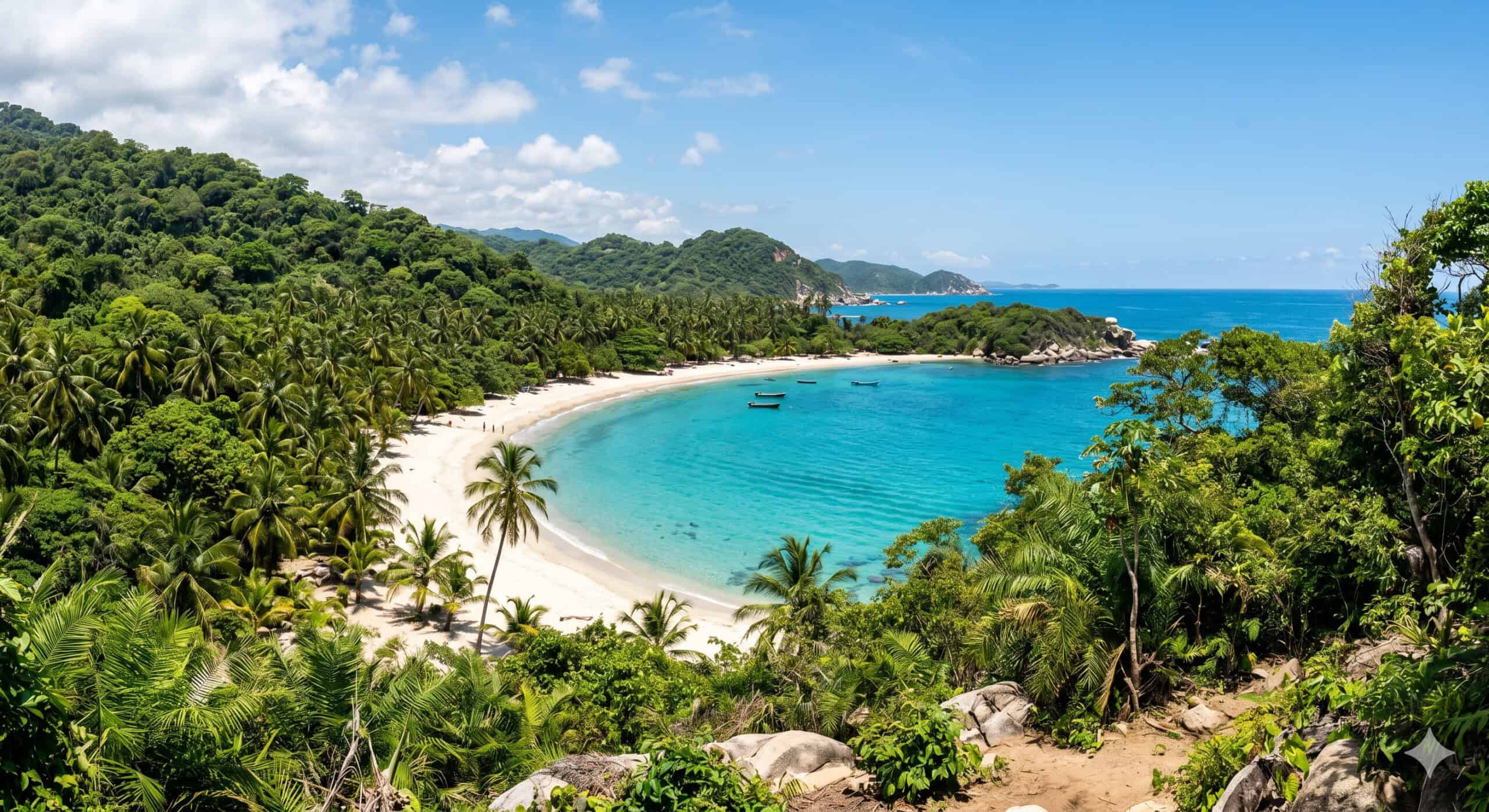
Colombia is the kind of place that stays with you. I landed in Bogotá braced for all the wrong things — the headlines have a way of doing that — and within 48 hours I was completely sold. The variety here is hard to overstate: ancient stone ruins, Caribbean sailing, cloud forest hikes, colonial city strolls, and some of the finest coffee on the planet. If you’re looking for the best places to visit in Colombia in 2026, this guide covers all ten — with specific planning notes so you can actually book the trip, not just dream about it.
1. Bogotá: Where History, Street Art, and Altitude Collide
Colombia’s capital sits at 8,660 feet above sea level — give yourself at least one slow day to acclimatize before you start charging up hills. Begin in La Candelaria, the colonial heart of the city, where painted facades, murals, and university energy make it easy to burn a morning just walking. Then head to the Museo del Oro (Gold Museum), which houses 55,000 pre-Hispanic gold pieces in a building designed to make you feel their weight. It’s open Tuesday through Saturday (with extended evening hours), closed Mondays — check the current schedule before you go.
Street food tip: grab a tamale and a tinto from the vendors around Plaza Bolívar before ducking inside. The contrast between the chaos of the square and the hushed reverence of the gold collection is genuinely striking. Budget travelers will find Bogotá’s food scene remarkably affordable; even mid-range meals here cost a fraction of comparable cities in Europe or North America.
2. Medellín: The City That Reinvented Itself
No city in Colombia has changed more dramatically in the past three decades than Medellín. Once a byword for violence, it’s now a legitimate contender on lists of the world’s most innovative cities — and it’s not just a reputation play, you feel it when you’re there. The year-round spring-like climate (hence the nickname “City of Eternal Spring”) makes it a pleasure to explore on foot or by the efficient Metro.
Go with a small local guide group, not a large bus tour. The story of this place deserves that much attention. For where to sleep, Poblado is the logical base for most visitors — see our full guide to the best places to stay in Medellín for a range of options across budgets. Grab a local SIM or eSIM before you leave the airport — our Medellín SIM card guide covers the fastest options — since you’ll want data for the Metro app and ride-hailing from day one.
3. Cartagena: A UNESCO-Listed Walled City That Earns Every Photo
Cartagena’s old city is beautiful in a way that doesn’t need any photographer’s tricks. Bougainvillea spills over every balcony, the late-afternoon light turns the stone buildings honey-gold, and salsa drifts out of open courtyards at all hours. The historic fortifications are officially UNESCO World Heritage-inscribed, and the energy here is unlike anywhere else in Colombia.
If you do one structured attraction, make it Castillo de San Felipe de Barajas — the massive star fortress just outside the old city walls. Open daily, with views from the top that are worth every step of the climb. Visit early morning or late afternoon: the midday heat inside those stone walls is punishing, and the crowds thin out noticeably at the edges of the day. The historic district is also walkable and extremely compact, which makes it easy to pair the castle with a long lunch in Getsemaní afterward.
4. Tayrona National Park: Plan Around the Closure Dates
Tayrona is Colombia’s most beloved natural escape, and the appeal is obvious: hike through dense jungle, emerge onto a turquoise cove, repeat. The beaches at Cabo San Juan in particular are the kind you’d see on a screensaver and assume were digitally enhanced. They’re not.
Critical 2026 planning note: Tayrona closes three times a year under the indigenous-led “Respira Tayrona” program. The 2026 scheduled closure dates are February 1–15, June 1–15, and October 19–November 2. The park also had an unscheduled security-related closure from February 17 through March 5, 2026, and has since reopened under a special surveillance plan with an increased police presence — always confirm current status before booking anything non-refundable inside the park, since conditions here can shift on short notice. If your trip overlaps a closure, base yourself in Santa Marta and day-trip to Minca (coffee farms, waterfalls, cool mountain air) or up the coast to Palomino. Given the unpredictability here, this is one leg of a Colombia trip where travel insurance covering trip changes is genuinely worth the investment. Note: the park also requires visitors to purchase on-site medical insurance at the entrance (around 7,000 COP — roughly $1.75 USD — per person per day).
5. Salento and the Cocora Valley: Coffee Country at Its Most Beautiful
Salento is compact, colorful, and completely without pretension — a small coffee-region town with brightly painted balconies, excellent local food, and a main square that practically demands you sit down with a cup of something and watch the world go by. It would be worth visiting just for that. But the real reason people make the journey is the Cocora Valley, about 30 minutes up the road by jeep, where Colombia’s national tree — the towering wax palm — grows to heights that seem structurally improbable against a misty, green landscape.
Wear waterproof footwear (the valley trails get genuinely muddy), start the hike early to beat the tour groups that arrive mid-morning, and build in time for a slow lunch back in Salento afterward. If you have two nights here, use them both. This isn’t a place that rewards rushing.
6. San Agustín Archaeological Park: Ancient Mysteries in a Jungle Setting
For something entirely different from Colombia’s usual highlights, San Agustín Archaeological Park belongs on the list. This UNESCO World Heritage Site contains one of the largest collections of pre-Hispanic funerary monuments in the Americas — carved stone figures guarding burial mounds scattered across a landscape of hills, rivers, and dense vegetation. It’s remote, which means fewer crowds and a genuinely atmospheric visit.
The park operates with posted hours through ICANH (Colombia’s Institute of Anthropology and History). Plan to pair San Agustín with nearby sites Alto de los Ídolos and Alto de las Piedras — the journey out to this corner of Colombia is long enough that you should make the most of it. Budget two full days minimum.
7. Popayán: The White City and Colombia’s Most Extraordinary Holy Week
Popayán earned its nickname La Ciudad Blanca for good reason — the colonial buildings here are painted white by civic tradition, and the effect is striking against the green Andean surroundings. The city is elegant, easy to walk, and worth two days even outside of festival season. The food is genuinely underrated: the Cauca region has its own culinary traditions distinct from the rest of the country, and they’re worth exploring.
The main event: Semana Santa (Holy Week), which UNESCO has recognized as Intangible Cultural Heritage of Humanity. Popayán’s processions have run for over 400 years and are among the most impressive in Latin America. If your trip dates anywhere near late March to early April, consider building Popayán in. Book accommodation months ahead — the city fills completely during Holy Week.
8. The Rosario Islands: Caribbean Blues Without the Long Haul
A short boat ride from Cartagena, the Islas del Rosario area is a straightforward day trip (or overnight) for snorkeling, beach time, and genuine decompression. The islands fall within the Parque Nacional Natural Corales del Rosario y de San Bernardo, and the protected status keeps the reefs in reasonable shape compared to more overrun Caribbean destinations.
Choose your tour carefully before booking. Some Rosario Islands boats are floating parties with reggaeton at full volume from 8 AM — which is someone’s ideal day, just not everyone’s. Others are small-group, snorkel-focused, and built around the actual marine environment. Ask explicitly about group size and pace when you book. The price difference between party boat and nature tour is usually negligible; the experience difference is not.
9. Guatapé and El Peñol: Colors, Lakes, and 740 Steps That Deliver
Guatapé is an easy day trip from Medellín — about 1.5 hours east — and it rewards you the moment you arrive. The town is famous for its zócalos, the painted decorative panels that line the base of every building with scenes from local life. Add the lakeside setting and a laid-back pace, and you have a place that’s genuinely hard to leave once you’re there.
Go early for cooler temperatures and cleaner views, then spend the afternoon at the Guatapé waterfront. If you need help planning your base in Medellín for this and other day trips, see our guide to cheap flights to Medellín from the US.
10. Ciudad Perdida: Colombia’s Definitive Multi-Day Trek
This is the one. Ciudad Perdida — called Teyuna by the indigenous Kogui people who have always known it — is a 4-to-6-day round-trip trek through the Sierra Nevada de Santa Marta that ends at an archaeological site established around 650 CE, predating Machu Picchu by several centuries. The trail crosses rivers, climbs steep jungle paths, and overnights in open-air camps. It’s humid and demanding and genuinely unforgettable.
Crucially for 2026 planning: entry to Ciudad Perdida is sold exclusively through authorized operators by ICANH mandate — updated tariffs took effect January 1, 2026. There is no independent access. Book with an established licensed operator, factor in at least two recovery days afterward (your legs will demand them), and ask your operator directly about the physical requirements if you have any doubts. Most reputable operators will give you an honest answer.
Frequently Asked Questions About Visiting Colombia
Is Colombia safe for tourists in 2026?
The US State Department currently has a Level 3: Reconsider Travel advisory for Colombia as a whole. That said, the major tourist cities — Bogotá, Medellín, Cartagena, Santa Marta — are well-traveled and manageable for visitors who take standard precautions. Stick to tourist and residential neighborhoods, use ride-hailing apps (Uber, Cabify, InDriver) instead of street taxis, and keep the local phrase “no dar papaya” in mind: don’t make yourself an easy target. Avoid rural highways and border regions. Fly between major cities when possible rather than taking intercity buses.
What is the best time of year to visit Colombia?
It depends heavily on where you’re going. For the Caribbean coast (Cartagena, Tayrona, Santa Marta), the driest months are December through March and July through August. Bogotá and Medellín have mild weather year-round with two rainy seasons (April–May and October–November) that rarely ruin a trip but can affect hiking. The Cocora Valley and coffee region are best from December through February and June through August. Always check Tayrona’s scheduled closure dates when planning: Feb 1–15, June 1–15, and Oct 19–Nov 2.
Do US citizens need a visa to visit Colombia?
No — US citizens can visit Colombia for up to 90 days without a visa. At immigration, you may be asked to show proof of onward travel and sufficient funds. Always verify current entry requirements with the Colombian consulate or a trusted travel resource before departing, as policies can and do change.
How many days do you need to see Colombia?
A solid first trip runs 10 to 14 days. A workable structure: 2–3 days in Bogotá, 3–4 days in Medellín (including a Guatapé day trip), and 3–4 days on the Caribbean coast split between Cartagena and Tayrona or Santa Marta. Add Salento or San Agustín if you have more time. Ciudad Perdida requires a dedicated 4-to-6-day block and is best treated as its own standalone leg.
Is travel insurance worth it for a Colombia trip?
Yes, especially for Colombia. Tayrona National Park has occasional unscheduled closures that can strand travelers with non-refundable bookings, and the Ciudad Perdida trek takes place in remote jungle terrain. Look for a policy covering trip changes, medical evacuation, and emergency medical care. Note that Tayrona also requires visitors to purchase on-site medical insurance at the entrance (around 7,000 COP per person per day), but this is not a substitute for a comprehensive travel insurance policy.
Colombia rewards the traveler who shows up prepared and stays curious. The mix of colonial history, natural beauty, and genuine local warmth doesn’t have a lot of competition in South America. Explore all our Colombia travel guides to keep building your trip.
Recent Posts
Frankfurt Airport Layover Guide: What to Do With 6–24 Hours (2026)
Frankfurt Airport (FRA) is Europe's fourth-busiest airport, which means the odds of getting routed through it on your way to Prague, Nairobi, or Bangkok are pretty good — and so is the chance...
You're staring at a scooter accident video on TikTok, a headline about a missing tourist, and a friend's warning about "that Bali crime wave," and you're wondering: is Bali safe in 2026? Short...