
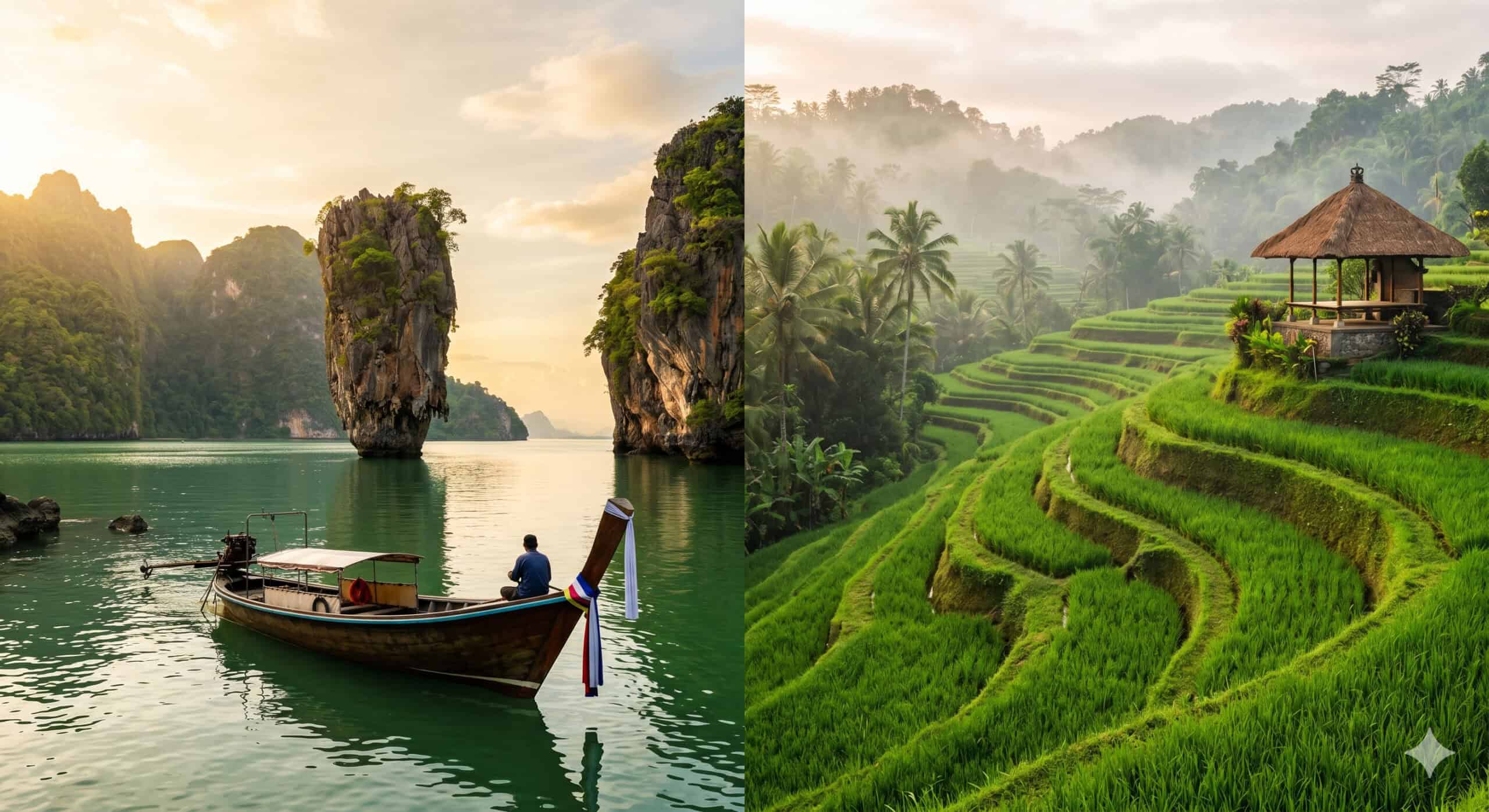
Thailand or Bali — it’s one of the most common Southeast Asia planning questions, and for good reason. Both deliver on the promise: warm weather, incredible food, striking scenery, and experiences you’ll be talking about for years. The real question isn’t which is better. It’s which is better for you — and that answer looks different depending on what kind of traveler you are. I’ve spent time in both. Here’s how I actually think about the choice.
Thailand vs. Bali at a Glance
Before diving deep, this quick table maps the most common traveler goals to the better-fitting destination. Neither answer is absolute — it’s a starting point, not a verdict.
| You want… | Pick Thailand | Pick Bali |
|---|---|---|
| City + beach in one trip | Bangkok → islands = easy combo | Denpasar isn’t really a city trip |
| Maximum destination variety | Islands + jungle + mountains + history | Beaches + temples + rice terraces + cafés |
| Easy island hopping | Very easy (Phuket, Krabi, Koh Samui, Koh Tao) | Bali itself is usually the base |
| Surf-first vacation | Some spots, but not the main draw | One of the top reasons people go |
| Wellness + slow travel | Chiang Mai and Pai are excellent | Ubud is in a league of its own |
| Private villa life | Available, but not the signature experience | This is Bali’s superpower |
Stop Comparing “Thailand” to “Bali” — Pick a Home Base Instead
Thailand is a country with dramatically different regions. Bali is a single island. Comparing them head-to-head is a bit like comparing California to Hawaii — useful at a broad level, but the real decision only clicks when you know which part of each you’re actually considering.
A more useful question: where do you want your home base?
Thailand home bases (pick one + a side trip)
- Bangkok — temples, rooftop bars, day trips, and some of the best street food anywhere on earth. Could easily fill a week on its own.
- Phuket / Krabi — beaches, boat days, dramatic limestone karst scenery, and solid resort infrastructure. The Andaman coast at its best.
- Chiang Mai — mountains, temples, coffee shops, and a cooler pace (literally — the elevation keeps temperatures a few degrees lower than the coast).
Bali home bases (choose your vibe)
- Kuta / Seminyak — classic beach-town energy, shopping, and accessible nightlife. Great for first-timers who want a lot nearby.
- Canggu — surf culture, creative cafés, a younger crowd, and a hipper vibe that’s taken over from Seminyak as the trendy base.
- Uluwatu — clifftop sunsets, serious surf breaks, and a more dramatic landscape than the flat south.
- Ubud — rice terraces, wellness retreats, art markets, and a pace that actually lets you decompress. The anti-beach club option.
Beaches: Which Destination Actually Wins?
Thailand wins for sheer variety. If you’re willing to move around — and with domestic flights and inter-island ferries being cheap and frequent, you should be — you can chase calm water, snorkel-worthy reefs, and dramatic scenery all in one trip. The Andaman coast (Phuket, Krabi, the Phi Phi islands) is best from November through April. The Gulf coast (Koh Samui, Koh Tao, Koh Phangan) runs on a different weather cycle, which means there’s almost always a great beach somewhere in the country regardless of when you arrive.
Bali wins for beach lifestyle. Even when the sand itself isn’t picture-perfect — the south-facing beaches deal with Indian Ocean swells and can have strong rip currents — the ecosystem around the beach is exceptional. Sunset beach clubs, smoothie bowls, a surf session followed by a cocktail, all within easy reach. If your ideal beach day ends at a golden-hour viewpoint with a great meal, Bali makes that effortless. The trick is knowing when to visit Bali — dry season runs from April through October, and that’s when you want to be there for beach days.
One practical point: if calm, clear water for swimming is your top priority, Thailand usually delivers that more reliably. Bali’s exposed beaches are better suited to surfing than casual swimming.
Culture, Temples, and “Wow” Moments
Thailand’s cultural sightseeing has a deep lineup. Bangkok alone could fill several days: the Grand Palace and Wat Phra Kaew, Wat Pho with its enormous reclining Buddha, the floating markets, Chatuchak Weekend Market. Head north and Chiang Mai adds a completely different chapter — ancient Lanna Kingdom temples, elephant sanctuaries, and night bazaars that feel far removed from beach Thailand.
Bali’s culture hits differently. It’s not a series of stops on a sightseeing map — it’s the atmosphere. Offerings on the sidewalk every morning, incense from a neighborhood ceremony drifting through your window, a procession appearing on a street you’d been walking all week. The island is around 87% Hindu in a country that’s mostly Muslim, which gives Bali a texture unlike anywhere else in Southeast Asia. Tanah Lot, the clifftop Uluwatu temple at sunset, and the sacred Monkey Forest in Ubud are worth seeing — but the culture sneaks up on you between the major landmarks too.
Short version: Thailand offers more volume of iconic cultural sightseeing. Bali offers more cultural immersion woven into everyday life.
Food: Street Eats vs. Café Culture
Thailand is, in my opinion, one of the great food destinations on earth — and I don’t say that lightly. Night markets, street-food stalls that cost almost nothing, regional specialties that change as you move between provinces, and Bangkok’s serious restaurant scene sitting on top of it all. If your vacation happiness is directly tied to “what am I eating next,” Thailand is very hard to beat.
Bali has a different, but excellent, food scene. The modern café culture is outstanding — great coffee, creative brunch spots, smoothie bowls that are genuinely worth what they charge, and a wellness food scene that’s become a draw in its own right. Local warungs (small family-run spots) serve honest, inexpensive Indonesian classics like nasi goreng and babi guling. It’s not the deep culinary rabbit hole that Thailand offers, but it’s a very good place to eat well, especially if you lean toward contemporary café dining over street food.
Budget and Daily Costs for 2026
Both destinations are affordable compared to Europe or North America, but the breakdown is different.
Thailand tends to reward budget travelers more aggressively. Street food meals run $1–3, local guesthouses are cheap, and you can get around the whole country by bus or train for very little. Mid-range travelers spending $60–100/day live comfortably. Luxury travelers get exceptional value — internationally-branded resorts at a fraction of comparable Western prices.
Bali has a wider range. You can stay in a guesthouse and eat at warungs for under $40/day, or you can book into a private infinity-pool villa in Seminyak and spend $300+. The villa culture is genuinely Bali’s signature experience — and what you get for the money is impressive by any standard. If you want help sorting through the options, our guide to the best places to stay in Bali is a good starting point, and our list of top jungle resorts in Bali is worth a look for anything off the beach.
One budget item worth including for either destination: travel insurance. Medical care quality varies across Southeast Asia, medical evacuation is expensive, and weather disruptions happen. A solid travel insurance policy that covers emergency medical and trip cancellation is worth buying before you fly, regardless of which destination you choose.
2026 Entry Requirements and Key Logistics
Both destinations are straightforward for US and most Western European visitors, but there are a few 2026-specific details worth knowing before you book.
Thailand: Most visitors enter visa-free for 60 days under the current exemption. Thailand requires a Thailand Digital Arrival Card (TDAC) for all international arrivals — it’s free, completed online before you travel, and takes a few minutes. Confirm current policies at the official Royal Thai government immigration portal, as entry rules are updated periodically.
Bali (Indonesia): Most tourists enter on a free Visa on Arrival at Ngurah Rai International Airport (DPS), valid for 30 days and extendable once for another 30. Bali also enforces a mandatory tourist levy of IDR 150,000 per person (roughly $9–10 USD) — paid online at the official Love Bali government portal before arrival. Pay through the official site only — scam payment pages exist. If you’re flying in from the US, we cover the best routes and what to expect at DPS in our complete guide to flying to Bali from the United States.
One important Bali calendar note: Nyepi — Bali’s Day of Silence — falls on March 19, 2026. The entire island observes a day of silence: no outdoor movement, no lights, no flights in or out. If your trip overlaps with Nyepi, you’ll be at your accommodation for the full day. It’s a remarkable cultural experience to witness from your villa or guesthouse — just plan around it, not against it.
Nightlife and One Rule That Applies in Both Places
Thailand’s nightlife ranges from Bangkok’s world-class rooftop bars and club scene to beach party culture in the islands and the Full Moon Party on Koh Phangan. There’s something for every budget and taste, from dive bars to ultra-lounges.
Bali’s nightlife is concentrated but dialed-in. Seminyak and Canggu have beach clubs that get the golden-hour formula exactly right — the kind of places where you arrive for sunset and leave four hours later. Kuta has the dense club strip for those who want it.
One rule applies equally to both destinations: drug laws in Thailand and Indonesia are severe. Both countries treat drug offenses seriously, with penalties ranging from lengthy prison sentences upward. Official travel advisories from the US State Department and UK FCO are explicit on this. Stay smart, stay legal.
For Thailand specifically, there’s been a notable 2026 update: the afternoon retail alcohol sales ban was lifted on a trial basis starting in late 2025, meaning you can often buy alcohol through the afternoon at retail venues rather than only during the traditional time windows. Our guide to Thailand’s alcohol laws and nightlife rules has the current full rundown, including what changes by venue type and province.
Frequently Asked Questions About Thailand vs. Bali
Is Thailand or Bali better for first-time visitors to Southeast Asia?
Thailand is generally the easier entry point. It has more infrastructure for independent travelers, a wider range of iconic experiences, and Bangkok alone can fill several days before you’ve even reached a beach. Bali is excellent but works best when you can settle into its rhythm — something that’s easier to appreciate on a second or third Southeast Asia trip.
Is Bali or Thailand cheaper?
Both are affordable, but Thailand has a lower floor. Street food and budget accommodation in Thailand are hard to beat on price. Bali can be equally cheap if you stay at guesthouses and eat at warungs, but mid-range pricing — especially for accommodation — has risen steadily in recent years. Budget travelers tend to find Thailand gives them more for less. Both destinations offer exceptional luxury value compared to equivalent Western options.
How long should I spend in Thailand vs. Bali?
For Thailand, 10–14 days is a comfortable minimum if you want Bangkok plus a beach or a northern stop. For Bali, 7–10 days works well for a home-base-plus-day-trips setup. Both reward longer stays — neither destination feels “finished” after a week.
Is Thailand or Bali better for a honeymoon?
Both are excellent honeymoon destinations. Thailand edges ahead for couples who want variety and romance across multiple settings — rooftop dinners in Bangkok, over-water bungalows in the islands. Bali wins for couples who want the “private villa with an infinity pool in the rice fields” experience, which is attainable at surprisingly reasonable prices and is hard to replicate anywhere else.
What time of year is best to visit Thailand vs. Bali?
Their seasons are roughly inverted. Thailand’s west coast and Andaman Sea are best from November through April (dry season). Bali’s dry season runs from April through October — the ideal window for beach days and reliable weather. April is a sweet spot where both destinations are in decent shape, making it a good month if you’re planning to visit both.
The Bottom Line: Thailand or Bali?
There’s no wrong answer in the Thailand vs. Bali debate — just a better match for your travel style. Want a trip that feels like three different vacations in one? Book Thailand. Want an island that makes it easy to find your rhythm from the first morning coffee to the last sunset drink? Bali delivers that better than almost anywhere. Either way, leave some days unplanned — that’s when both places tend to show you their best.