
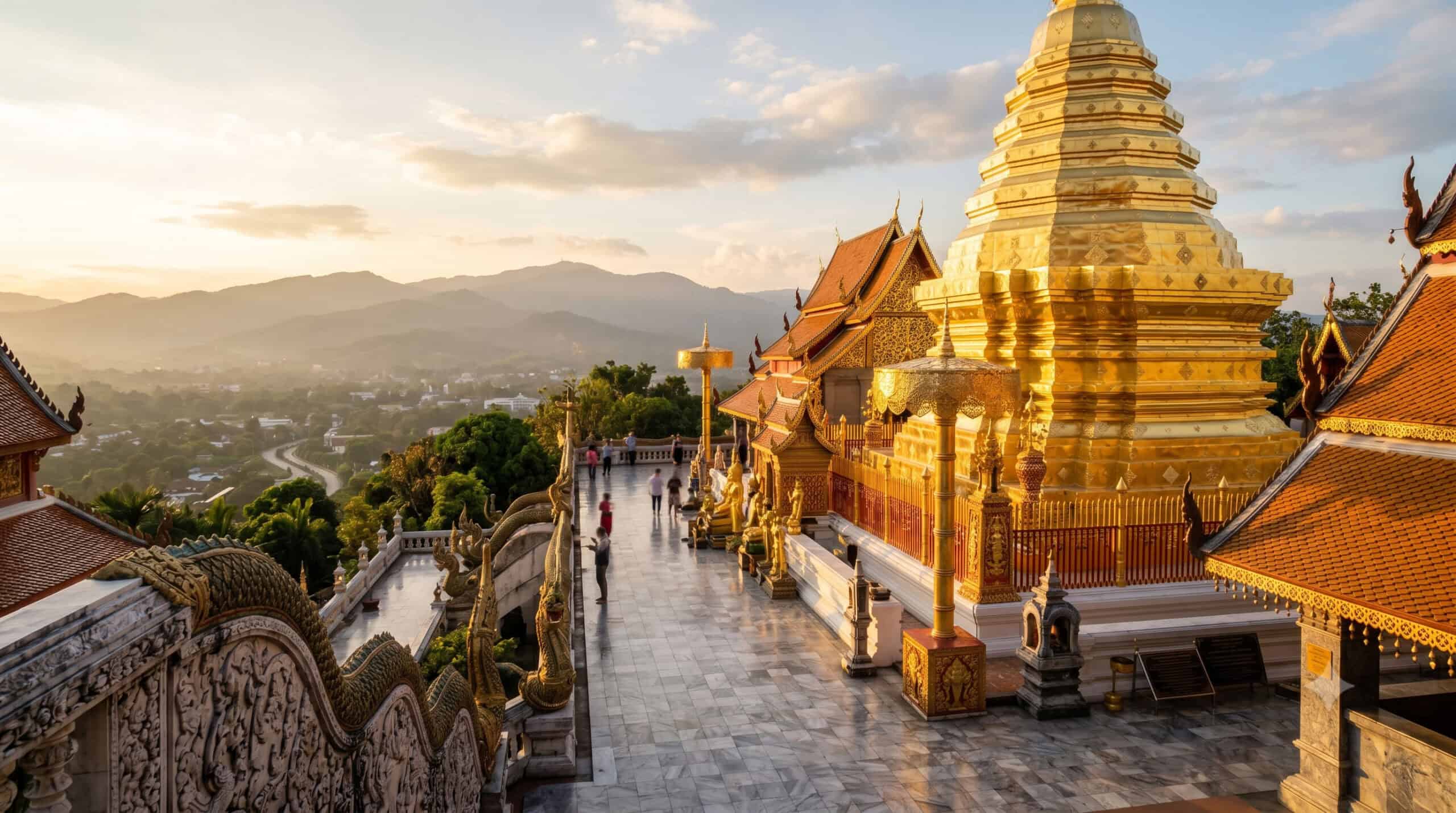
Chiang Mai has a way of slowing you down—and most people are grateful for it. Tucked into the foothills of Northern Thailand, Thailand’s second city offers something the beaches don’t: centuries of living culture, mountain air, some of the best food in the country, and a pace that actually lets you breathe. Whether you’re planning three days or three weeks, this 2026 Chiang Mai travel guide covers everything you need to make the most of it.
Why Visit Chiang Mai Instead of the Beaches?
Thailand’s islands are world-class—no argument there. But Chiang Mai scratches a completely different itch. The comparison travelers make between Thailand and Bali often misses the point: the real dividing line in Thailand is north vs. south, city vs. coast.
Chiang Mai gives you real, walkable culture you can step into—old city walls, golden temples, traditional Lanna crafts, and a food scene that goes well beyond pad thai. It’s also one of the most popular long-stay destinations in Southeast Asia, thanks to world-class coffee, reliable co-working spots, and a friendly social scene. Add mountains, waterfalls, and day trips within an hour’s drive, and you’ve got a place that’s genuinely hard to leave.
Best Time to Visit Chiang Mai (Burning Season Explained)
Timing matters in Chiang Mai more than most places—primarily because of air quality. The city is fabulous year-round in terms of things to do, but the smoke situation from February through April is real and worth planning around. Northern Thailand’s agricultural burning season routinely pushes Chiang Mai’s AQI into “unhealthy” territory, sometimes for weeks at a time. If you’re sensitive to smoke, have asthma, or just want clear mountain views, aim for a different window.
Best window: November through February. Cooler temperatures, clear skies, and a lively travel season. Evenings can actually get chilly enough for a light jacket in December and January, which is a genuine novelty in Thailand. The broader Thailand travel tips you’ll want for planning also point to this window as the sweet spot for the north. If you must visit during burning season, check daily AQI readings before outdoor activities and choose accommodation with good air filtration. Late May onward—when the rains arrive—also clears the air noticeably.
Where to Stay in Chiang Mai: Best Neighborhoods for First-Timers
Chiang Mai’s three main areas each deliver a different version of the city. Old City is the obvious choice for first-timers who want to be close to the temples, the Saturday Walking Street, and the Sunday Night Market—everything is walkable and the atmosphere is hard to beat. Budget guesthouses, boutique hotels, and converted heritage homes all cluster here.
Nimman (Nimmanhaemin Road) is where the coffee, design shops, and co-working crowd live. It’s polished, walkable, and close to the Maya Mall area. If you’re staying longer than a week or care a lot about cafés and modern amenities, Nimman is the better base. The Riverside neighborhood rounds things out with a calmer vibe—boutique hotels with nice views, excellent restaurants, and enough distance from the tourist hustle that evenings feel genuinely relaxed. Tuk-tuk or rideshare apps bridge the gap between all three easily.
Top Things to Do in Chiang Mai
Temple-Hop the Old City (and Doi Suthep)
Chiang Mai has well over 300 temples—and the good news is you don’t need to visit all of them to feel like you’ve genuinely experienced Lanna culture. The inner old city moat area is the best place to start: Wat Phra Singh is the postcard-perfect Lanna-style temple right in the thick of things, Wat Chedi Luang has a massive ruined chedi that’s genuinely impressive, and Wat Umong is the forest temple with ancient tunnels and peacocks wandering the grounds—much quieter than the center, and worth the short ride out.
Wat Phra That Doi Suthep sits about 15 km outside the city at roughly 1,000 meters up, and the views over Chiang Mai from the base of the chedi are excellent—especially around late afternoon when the light goes golden. Go on a weekday if you can; weekends fill up fast. Dress code applies at all temples: shoulders and knees covered. For a deeper dive into the history and culture behind Thailand’s temples, it helps to come with a little context.
Eat Your Way Through Northern Thai Food
If Chiang Mai has a love language, it’s food. Northern Thai cuisine is a completely different beast from the central Thai dishes most people know—richer, spicier, more herb-forward, and often served with sticky rice rather than steamed rice. Start with Khao Soi, the creamy coconut curry noodle soup topped with crispy noodles that’s basically the city’s official dish. A bowl at a packed local spot runs about 60–80 baht; tourist areas charge a bit more but are still cheap.
Also on your list: Sai Oua (Northern herb sausage—smoky, fragrant, great with sticky rice), Nam Prik Noom (roasted green chili dip), and Larb Mueang (the Northern version, which is earthier and spicier than its Southern cousin). Beyond local food, Chiang Mai also has a genuinely excellent café scene—third-wave coffee roasters, Japanese-style pour-overs, and creative brunch menus that draw as many laptop workers as tourists.
Night Markets: Come Hungry, Leave With Extra Luggage
Chiang Mai’s night markets are some of the best in Thailand—and unlike Bangkok’s markets, they still feel like they’re primarily for locals and travelers who are actually interested in crafts rather than just selfie spots. The Sunday Night Market on Wualai Road (the Silversmith area) is the gold standard: street food, handmade goods, live music, and an energy that’s fun without being overwhelming. The Saturday Walking Street nearby covers similar ground. The Chiang Mai Night Bazaar on Chang Klan Road runs nightly and skews more toward souvenir shopping, but it’s still worth a lap.
What to buy: hand-woven textiles and scarves, ceramics, silverwork, handmade soaps, and local snack packs. Budget a couple of hours minimum—”just a quick look” is a lie you’ll tell yourself at least twice.
Ethical Elephant Experiences
Meeting elephants responsibly is one of Chiang Mai’s most meaningful travel experiences—when done right. The baseline for an ethical sanctuary: no riding, no shows or tricks, no bullhooks, and a focus on observation and natural behavior rather than hands-on interaction. Elephant Nature Park is the best-known option and one of the most transparent about its rescue and rehabilitation work; it offers both full-day and multi-day visit programs. Smaller sanctuaries like BEES (Burm and Emily’s Elephant Sanctuary) take a “hands-off” approach to elephant interaction that’s worth seeking out if that philosophy appeals to you.
When researching any sanctuary, check for red flags: elephants doing tricks, back-riding saddles, or operators who won’t explain their welfare practices. Good places are happy to answer questions about how the elephants were acquired and what their daily routines look like.
Wellness, Massage & Muay Thai
Chiang Mai takes self-care seriously. Foot massages start around 200 baht for an hour, and full-body traditional Thai massages are similarly priced at the dozens of reputable parlors throughout the Old City and Nimman. The Chiang Mai Women’s Correctional Center runs a well-regarded vocational massage program that’s been covered in major travel outlets—arrive early as waits can be long. For something more structured, yoga studios and meditation retreats are easy to find across the city.
If fitness is your thing, Chiang Mai is also a solid place to try Muay Thai training—there are camps for all levels, from dedicated fighters to curious tourists who want a real workout with some cultural depth.
Day Trips from Chiang Mai
One of Chiang Mai’s underrated advantages is how quickly you get from city streets to genuine wilderness. Half the adventure in northern Thailand is the drive itself—mountain switchbacks, rice field views, and hill tribe villages that most visitors miss entirely.
Doi Inthanon National Park is the big one: Thailand’s highest peak at 2,565 meters, with twin royal pagodas, misty cloud forest, and waterfalls that look like screensavers. It’s about a 2-hour drive from the city and easily doable as a full-day trip. Sticky Waterfall (Bua Thong) is a fun, unusual detour—the mineral-rich water lets you literally walk up the falls without slipping. Chiang Rai is a long day but manageable; the White Temple (Wat Rong Khun) is the headliner, and the Black House (Baan Dam) nearby is equally worth it. For two-wheeled adventurers, the Mae Hong Son Loop is one of Thailand’s great motorcycle road trips—600+ kilometers of mountain roads that start and end in Chiang Mai.
Getting Around Chiang Mai: Practical Tips
The Old City is small enough to walk. For everything else, Grab (Southeast Asia’s Uber equivalent) works well and gives you a fixed price before you commit—useful in a city where tuk-tuk and songthaew (red truck shared taxi) fares are occasionally negotiable in ways that favor locals more than tourists. Red songthaews run fixed routes and are genuinely cheap if you know where they’re going; wave one down and say your destination—if it’s on the route, you pay around 30–50 baht per person.
Renting a scooter is a popular option for getting out of the city, and Chiang Mai’s roads are more forgiving than Bangkok’s. That said, accidents among tourists on scooters are common—make sure you’re actually comfortable riding before heading into mountain terrain. International driving permit requirements and helmet laws apply. Budget around 200–300 baht per day for a basic scooter. For day trips to places like Doi Inthanon, a private driver or organized tour often works out easier and more cost-effective than renting a vehicle and navigating independently.
Sample Itineraries
3 Days in Chiang Mai
Day 1: Old City temple walk (Wat Phra Singh → Wat Chedi Luang) → Khao Soi lunch at a local spot → afternoon massage → Sunday or Saturday Night Market (depending on timing). Day 2: Doi Suthep in the morning → Nimman afternoon for coffee and wandering → riverside dinner. Day 3: Ethical elephant sanctuary (full-day program) or Doi Inthanon day trip. Either way, you leave having hit the main notes.
5–7 Days (The “Now We’re Staying” Version)
Add a cooking class (half-day, highly recommended—you visit the market before you cook), the Sticky Waterfall or Chiang Rai day trip, a Muay Thai session, more café-hopping in Nimman, and at least one slow morning with no agenda. Chiang Mai rewards lingering. After this, consider extending your Thailand itinerary south to the islands for a classic north-to-south trip.
Frequently Asked Questions About Chiang Mai
How many days do you need in Chiang Mai?
Three days covers the highlights—Old City temples, Doi Suthep, an elephant sanctuary, and the night markets. Five to seven days is the sweet spot if you also want a cooking class, day trips to Doi Inthanon or Chiang Rai, and some genuine downtime. Digital nomads and long-stay travelers often base here for weeks or months at a time.
When is the best time to visit Chiang Mai?
November through February is the best window: cooler temperatures, clear mountain air, and minimal rain. Avoid February through April if possible—this is burning season in Northern Thailand and air quality can get genuinely poor. Late May onward improves as the rains begin, though the full wet season (June–October) brings regular afternoon showers.
Is Chiang Mai safe for solo travelers?
Yes, Chiang Mai is one of the safer cities in Southeast Asia for solo travel. The city has a long track record with independent travelers, good infrastructure, and a genuinely welcoming local culture. Standard precautions apply: use Grab rather than unmarked taxis late at night, keep your belongings secure in busy markets, and be careful on scooters. Female solo travelers frequently cite Chiang Mai as one of their favorite stops in the region.
What is Chiang Mai famous for?
Chiang Mai is famous for its temples (it has over 300), its role as the cultural capital of Northern Thailand and former heart of the Lanna Kingdom, and its food—especially Khao Soi, the coconut curry noodle soup that’s the city’s signature dish. It’s also well known as a digital nomad hub, an ethical elephant sanctuary destination, and a base for trekking and mountain day trips.
Is Chiang Mai expensive?
Chiang Mai is one of the more budget-friendly destinations in Southeast Asia. Street food meals cost 60–120 baht, massages run 200–350 baht per hour, and decent guesthouses start around 400–600 baht per night. Mid-range boutique hotels typically run 1,000–2,500 baht. Organized tours and elephant sanctuary programs are the biggest daily expense for most travelers, usually 1,000–2,500 baht depending on length and operator.
Do I need a visa to visit Thailand as an American or European?
Most Western nationals—including US, UK, EU, Australian, and Canadian passport holders—qualify for visa-free entry to Thailand for stays of up to 60 days under Thailand’s current tourism visa exemption program. That said, visa policies can change. Always verify current requirements through the Thai Ministry of Foreign Affairs or your country’s embassy before you travel.
Ready to Book Your Chiang Mai Trip?
Chiang Mai doesn’t try to impress you with spectacle—it wins you over quietly. Temple bells in the morning, a bowl of Khao Soi that ruins you for anything else, a sunset from Doi Suthep, and the weird realization that you’ve been here four days and you’re not ready to leave. Lock in the right time of year, build in a day trip or two, and let the city do the rest.