
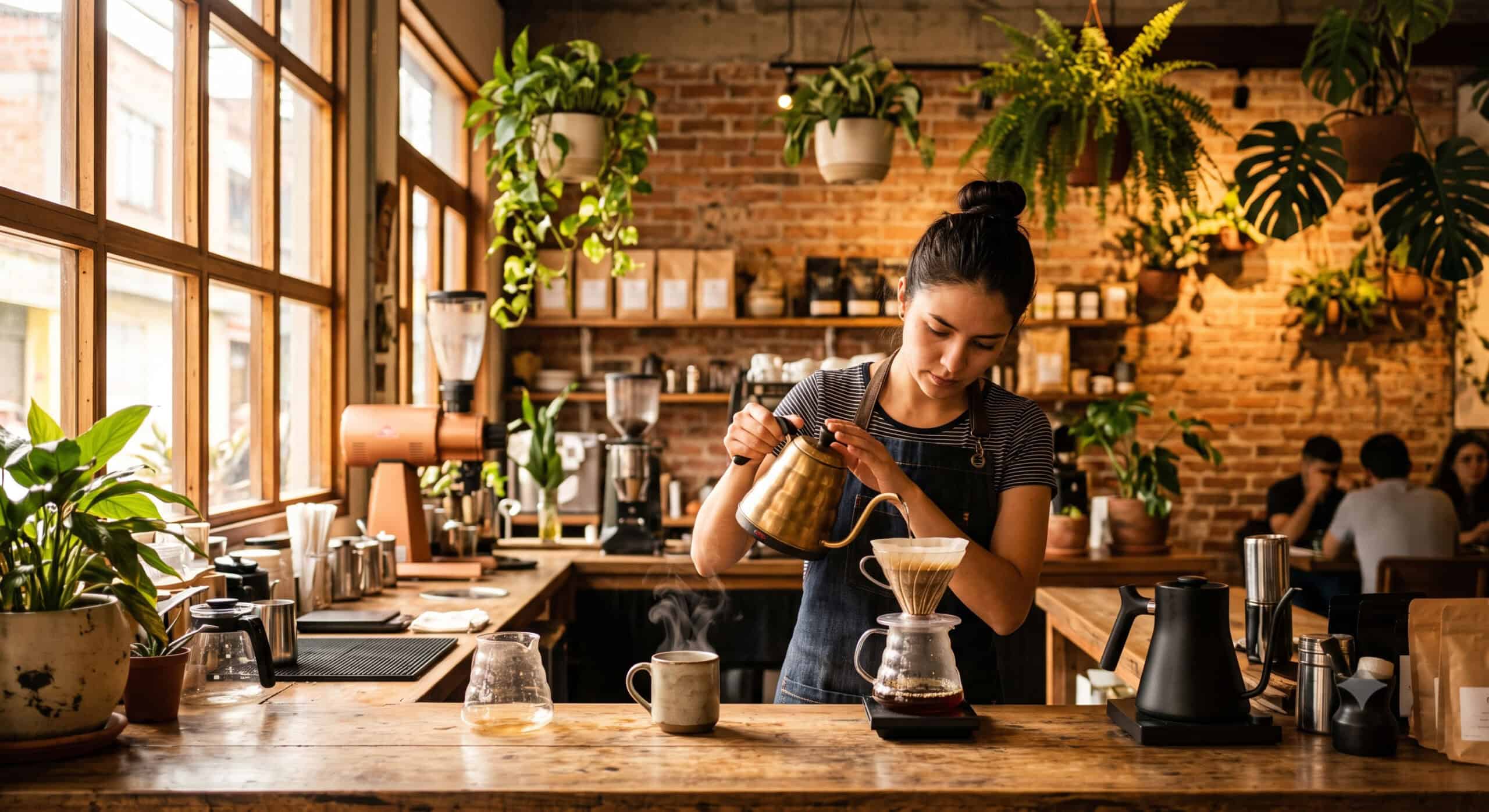
Colombians don’t do coffee half-heartedly, and Medellín is where that shows up the most. I’ve spent enough mornings in this city to tell you the best coffee shops in Medellín aren’t hiding — they’re just spread across a few neighborhoods, and each one has a completely different personality. Skip the hotel lobby coffee. Here are the nine spots actually worth your time, from polished specialty roasters in El Poblado to the kind of neighborhood café in Laureles where the barista remembers your order by day two.
Why Medellín Takes Its Coffee Seriously
Colombia is the world’s third-largest coffee producer, behind only Brazil and Vietnam, and it’s globally recognized for high-quality washed arabica — the kind grown at altitude, in volcanic soil, with the sun-and-rain rhythm that gives it a cleaner, brighter cup than most mass-market beans. USDA’s coffee report puts the country’s 2026/27 production at roughly 13.4 million bags, most of it still headed to specialty roasters rather than grocery-store tins.
Medellín itself sits in Antioquia, part of Colombia’s broader coffee-growing region, so a lot of what lands in your cup here was grown within a few hours’ drive. That’s part of why the city’s café scene has exploded over the past decade — baristas here aren’t importing a trend, they’re serving what’s already in their backyard. If coffee is even a secondary reason for the trip, it’s worth building a day or two around it while you’re checking out the rest of what Colombia has to offer.
El Poblado’s Specialty Coffee Scene
El Poblado is Medellín’s most polished neighborhood, and its coffee shops match that energy — modern spaces, serious sourcing, and menus built for people who want to talk about their beans a little. If you’re deciding where to stay in El Poblado, staying within walking distance of two or three of these is a genuinely good reason to pick a hotel.
Pergamino is the one to know first. It works directly with more than 600 coffee farmers across Colombia, roasts everything locally, and has grown into several El Poblado locations plus outposts in Belén and Laureles. The flagship space near Vía Primavera spans 400 square meters with an in-house roaster running while you drink, which tells you this isn’t a coffee shop dabbling in specialty — it’s their whole business. Order a pour-over here instead of your usual espresso drink; it’s the better way to actually taste what makes Colombian arabica worth the hype.
Café Velvet, a few blocks over on Vía Primavera, is Belgian-owned and leans into that identity hard — house-roasted coffee (roasted in both Colombia and Belgium) paired with genuinely good Belgian pastries and chocolate. It’s less about coffee theater and more about a proper sit-down break, and the wifi is solid enough that plenty of remote workers treat it like a second office.
For something more hands-on, DDC – Desarrolladores de Café in Provenza is part café, part coffee school. They roast on-site, run a co-roasting space where you can book time to roast your own batch, and serve a vegan breakfast menu alongside imported German tea if coffee isn’t your only interest that morning. It’s the spot for anyone who wants to understand the “why” behind a good cup, not just drink one.
Laureles Cafés Worth the Detour
Laureles is quieter and more residential than El Poblado, and its cafés reflect that — less polish, more personality. Pack layers before you head out here; Medellín’s weather flips fast between neighborhoods and altitude, so it’s worth a quick look at what to actually pack for Medellín before your trip.
Café Revolución is the neighborhood favorite, and it earns that reputation with genuinely good breakfast (the Desayuno Café Revolución — eggs, pancakes, French toast, fruit — is the move) plus fast wifi that’s made it a magnet for digital nomads. Fair warning: it gets busy, and food can take a while to come out during peak hours, so don’t go in starving with fifteen minutes to spare.
Café Zeppelin, a short walk from Segundo Parque de Laureles, is German-owned and completely embraces its own weirdness — antique furniture, a mannequin lamp, an aquarium built into an old TV cabinet. It sounds gimmicky written out, but in person it’s just a genuinely comfortable place to sit for two hours with a book and a good cup of coffee.
My favorite in this part of town, though, is Rituales, Compañía de Café. It’s a social enterprise sourcing beans from La Sierra, one of Medellín’s historically underserved communities, and its award-winning Paraiso brew is the result. The two-floor space has a quiet, co-working feel upstairs, and ordering here does something the big chains don’t: it puts money directly back into the community that grew your coffee.
Envigado and Beyond: Neighborhood Favorites
Don’t limit yourself to El Poblado and Laureles — some of the best coffee stops require a short trip into Envigado or a quick rideshare across town, and it’s worth knowing how to get around Medellín safely before you start wandering further afield.
El Café de Otraparte sits behind Casa Museo Otraparte in Envigado, the former home of Antioquian writer and philosopher Fernando González. Tables are set in a garden that makes you forget you’re still in a city of 2.5 million people, and the menu even nods to González’s writing in its dish names. It’s the slowest, most peaceful coffee stop on this list — go when you want a break from sightseeing, not when you’re in a rush.
Al Alma has quietly become Medellín’s brunch institution, with locations scattered across El Poblado, Laureles, Envigado, and a couple of shopping malls. Eleven years in and still a pioneer of the city’s brunch scene, it’s built for people who want a full meal alongside their coffee rather than just a to-go cup. Get there by 10 a.m. — every location fills up fast, and by 11 it’s a wait.
And then there’s Juan Valdez, Colombia’s answer to the ubiquitous coffee chain — except here it’s the real deal, not an import. With locations scattered across the entire city, it’s the easiest option when you just need a reliable espresso between stops, or a bag of beans to bring home. Not the most exciting stop on this list, but a genuinely useful one.
How to Order Coffee Like a Local
A few phrases will get you further than you’d think. Ask what’s “en método” if you want a filtered coffee — V60, Chemex, whatever they’re running that day — rather than an espresso drink. Order a “tinto” if you just want a small, simple black coffee the way most Colombians actually drink it day to day. And if you want to compare tasting notes between farms, Pergamino, Rituales, and DDC are your three best bets for that conversation.
One practical tip: grab a local eSIM before you land so you can pull up Google Translate or maps between café stops without hunting for wifi first.
Frequently Asked Questions About Coffee Shops in Medellín
What is the best coffee shop in Medellín?
There’s no single “best,” but Pergamino is the most consistently recommended for specialty coffee, while Rituales edges it out for atmosphere and social impact. If you only have time for one stop, Pergamino’s flagship near Vía Primavera is the safest bet.
Is coffee actually grown near Medellín?
Yes. Medellín is the capital of Antioquia, part of Colombia’s broader coffee-growing belt, and many of the beans served in the city’s cafés come from farms within that region rather than being trucked in from elsewhere in the country.
What does “tinto” mean in Colombia?
A tinto is a small, simple black coffee — the everyday cup most Colombians drink multiple times a day. It’s not the same as a Spanish “tinto de verano” or a wine reference; in Colombia, ordering a tinto just gets you basic black coffee.
El Poblado or Laureles — which has better coffee shops?
El Poblado has more polished, specialty-focused cafés built for tourists and remote workers. Laureles is quieter, more residential, and generally cheaper, with cafés that feel more like neighborhood hangouts than destinations. Neither is objectively better — it depends on whether you want polish or personality.
Do I need to speak Spanish to order coffee in Medellín?
No. Most cafés in El Poblado and Laureles have English-speaking staff, especially at the more tourist-facing spots like Pergamino and Al Alma. A few basic words — tinto, leche, azúcar — will still get you better service and the occasional friendly nod.
What is Pergamino coffee known for?
Pergamino is a Colombian specialty coffee company that works directly with hundreds of farmers, roasts locally in Medellín, and sells both prepared drinks and take-home beans. It’s widely considered the city’s benchmark for specialty coffee.
Nine cafés, four neighborhoods, one very good excuse to slow down between the museums and the walking tours. Start with whichever one is closest to your hotel, then let the rest of the list pull you into parts of the city you might’ve otherwise skipped.