
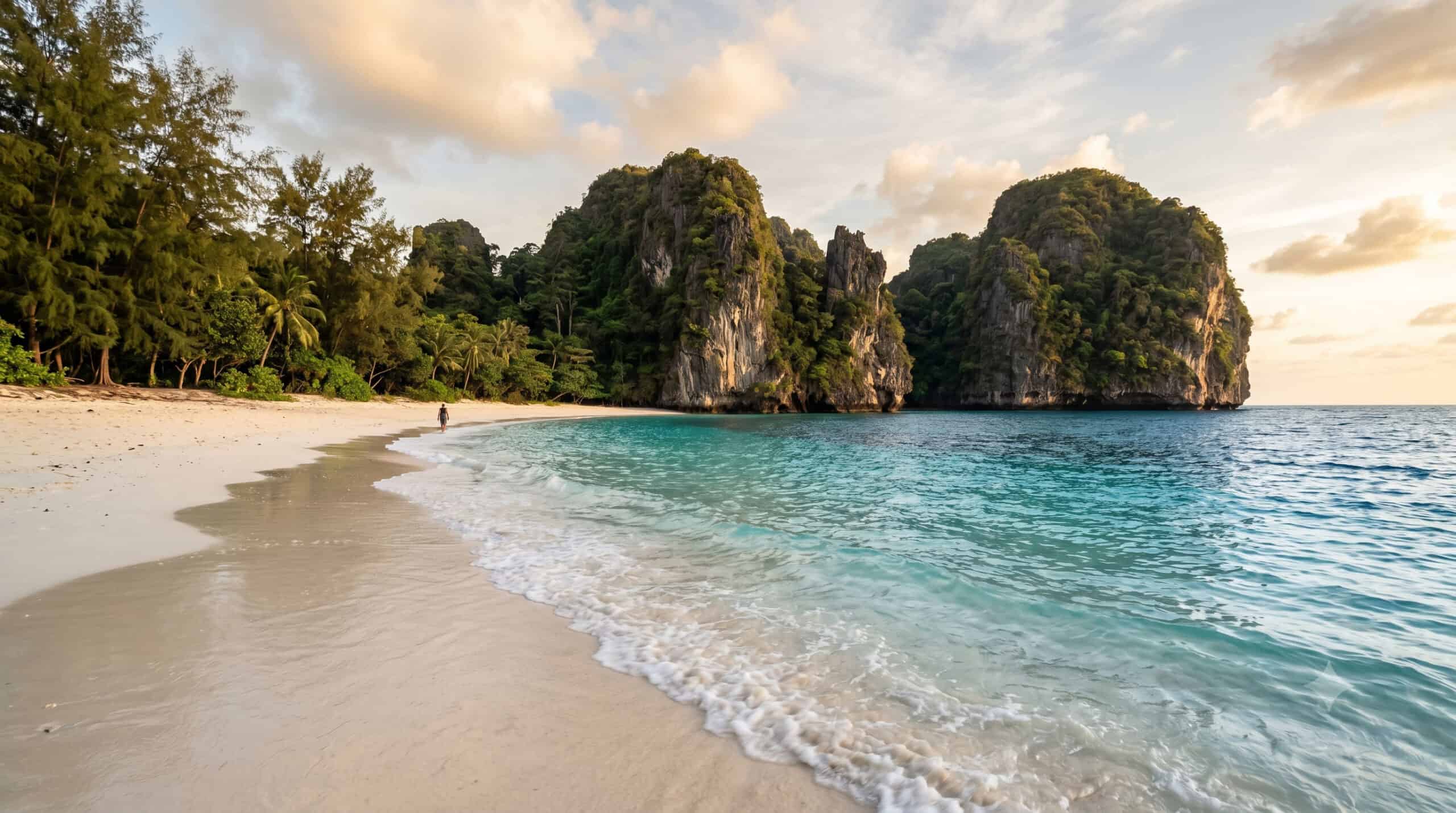
Thailand’s famous islands are incredible — Phi Phi is breathtaking, Koh Samui has something for every budget, and Koh Phangan hosts one of Asia’s most legendary beach parties. But if you’ve ever dreamed of swapping crowded beach clubs for powdery sand, water you can actually see through, and a pace that doesn’t feel like a production — Thailand’s hidden islands are where that trip actually exists.
The six islands below aren’t secret in any extreme wilderness sense. They’re accessible, they have real amenities, and the snorkeling and beaches are every bit as good as the famous spots. What they don’t have is wall-to-wall sunbathers and prices that climb every high season because someone posted a reel.
Here’s what makes each one worth the trip — plus honest planning notes so you actually show up at the right time of year.
Why Thailand’s Quieter Islands Are Worth Seeking Out
The famous islands got famous for real reasons. But popularity costs something in beach terms: noise, overcrowding, and resort prices that leave you wondering why you didn’t just go to Cancún. The islands on this list are quieter for a reason — some have difficult seasonal access, some are too far for the mass-market charter crowd, and some offer the kind of experience (serious diving, true slow travel) that naturally filters who shows up.
What you typically get on these quieter alternatives:
- Snorkeling in water that hasn’t been churned up by a hundred flippered day-trippers ahead of you
- Beaches where finding a patch of sand by 9am doesn’t require strategy
- Local restaurants serving better food at lower prices than the beachfront tourist strip
- That specific calm that kicks in when your trip stops feeling like a production
Some require an extra ferry or a longer van ride to reach. That transit is almost always what keeps them manageable — and it pays off the moment you get there.
1. Similan Islands: World-Class Diving With a Seasonal Catch
If you’re a diver or a serious snorkeler, the Similan Islands are the single best reason to make the trip to Thailand’s Andaman coast. The water clarity is exceptional — granite boulders dropping into coral gardens, visibility that can stretch 30+ meters on a good day, and marine life that feels genuinely undisturbed. The strict conservation rules aren’t just bureaucracy; they actually work, and the reefs here show it.
The planning catch: the Similans operate as a protected national park and close every monsoon season, typically mid-May through mid-October. The 2025–2026 season ran October 15 through May 15, 2026. During peak months, entry fills fast — Thailand’s authorities introduced an e-ticket system, so book ahead if you’re visiting December through February. (Gov PR Thailand)
Most visitors access the Similans by day trip or liveaboard from Khao Lak, a quiet beach town about 90 minutes north of Phuket. Liveaboards are the better option if diving is the point — you’ll reach outer islands and deeper sites that day-trippers never get close to.
Best for: Scuba divers, serious snorkelers, bucket-list underwater experiences.
2. Koh Tao: Small Island, Big Diving Culture
At just 21 square kilometers, Koh Tao is compact enough to feel figured-out within a day — but there’s enough reef, bay, and dive site variety to absorb a full week if that’s your thing. The island built its reputation as one of the cheapest, most accessible places in Southeast Asia to get a PADI Open Water certification, and that’s still true. Dozens of dive schools compete on price, and the offshore pinnacles — Chumphon and Southwest Pinnacle in particular — are worth every minute of the boat ride out.
If diving isn’t your focus, the northern and western bays (Mango Bay, Haad Yao) are noticeably calmer than the main Sairee Beach strip. Koh Tao has a real nightlife scene if that’s what you want, and it’s easy enough to sidestep if it’s not.
Koh Tao has had some negative press over the years related to reported incidents, which is worth knowing about. For most visitors, the same common-sense habits serve you here as anywhere with a social scene: vet your dive operators, don’t leave drinks unattended, travel with awareness. Our guide to Thailand’s alcohol laws and nightlife rules covers useful background if this is your first time on a Thai island.
Best for: Divers at every level, snorkelers, social travelers who want an island with real infrastructure.
3. Koh Lipe: Soft Sand and Postcard Water at the Southern Edge
Koh Lipe sits near Thailand’s far southern edge — a few kilometers from the Malaysian border, a long way from the Phuket crowds. The sand earns its reputation: genuinely soft, the squeaky kind. The water shifts through shades of turquoise and pale blue depending on where you’re standing and what time of day it is. The island’s scale (small but not tiny) keeps things from feeling overwhelming without tipping into “too remote.”
One seasonal note worth taking seriously: Koh Lipe sits within the broader Tarutao National Marine Park zone, and surrounding park activities and boat trips operate seasonally. Many close roughly June 1 through September 30, so island-hopping options around Koh Lipe are significantly more limited in that window. Always check locally before booking tours. (Thai National Parks)
Getting there from Bangkok involves flying or taking the overnight train to Hat Yai, then a van to Pak Bara pier, then a speedboat across to the island — about half a day of travel total from the capital. That trip length is a significant part of why Koh Lipe isn’t overrun year-round.
If you’re building a southern Thailand itinerary, Koh Lipe pairs well with Krabi. Our guide to where to stay in Krabi covers the accommodation options on that end of the Andaman coast.
Best for: Couples, beach lovers, sunrise and sunset chasers, anyone who wants genuinely beautiful water without the nightclub soundtrack.
4. Koh Khai: The Easy Day Trip From Phuket That Always Delivers
Three small islands clustered just east of Phuket — Khai Nok, Khai Nai, and Khai Nui — make up the Koh Khai group. These aren’t a destination you build a trip around, but as a half-day from Phuket, they consistently exceed expectations: clear water, soft sand, and decent snorkeling right off the shore without needing a long boat ride to reach it. Low-effort, genuinely pretty, easy to arrange through any Phuket hotel or pier operator.
The limitation is midday crowds. Tour boats arrive in waves from around 10am, so the early departures matter. Most day trips leave Phuket piers around 7:30–8am, and those first couple of hours on the islands are significantly calmer and more enjoyable. If you’re traveling with a mixed group where some people want to snorkel and others want to sit in the shade with a cold drink, this is probably your most practical pick on this whole list.
Best for: Phuket-based travelers, families, anyone wanting a beach day without a serious transit commitment.
5. Koh Phayam: The Most Laid-Back Island in Thailand’s South
Koh Phayam is for travelers who find Koh Tao a bit too lively and Koh Lipe slightly too polished. This is a bungalow-and-hammock island — mostly simple beach accommodation, a handful of small seafood restaurants, and stretches of sand where you might genuinely be the only person in sight. The two main beaches, Ao Yai (Long Beach) and Ao Khao Kwai (Buffalo Bay), are wide, walkable, and unhurried.
Getting there: ferry from Ranong, a small mainland town reachable by bus from Phuket (roughly 4 hours), Surat Thani, or Chumphon. It’s not complicated travel — it just takes longer than a Phuket day trip. Which, again, is why it’s quieter.
Development is slowly creeping in. But Koh Phayam still feels years behind the curve compared to most Thai islands — in the best way. If your ideal week involves turning your phone off, eating whatever the kitchen is serving, and doing absolutely nothing on a schedule, this island is made for you.
Best for: Off-the-beaten-path travelers, couples wanting real quiet, introverts, anyone recovering from an overpacked itinerary.
6. Ko Mak: Cycling, Calm Water, and the Gulf Coast’s Best-Kept Secret
Ko Mak (also spelled Koh Mak) sits in the Trat archipelago on Thailand’s eastern gulf coast — which automatically sets it apart from the Andaman-side destinations above. Far fewer international package tours come through here, the pace is noticeably slower, and the flat terrain makes it one of the only Thai islands you can explore comfortably by bicycle without risking your life on hills.
The beaches on the western side — Ao Kao is the main one — offer calm, clear water and a setting that looks exactly like the postcard and rarely fails to deliver. No significant nightlife, no overcrowded beach clubs, no DJ sets cutting into the sound of waves. That’s not an oversight; it’s Ko Mak’s personality, and the people who visit tend to appreciate it about 20 minutes after arriving.
Getting there: ferry from Laem Ngop pier near Trat, reachable by bus from Bangkok’s Eastern Bus Terminal or a short flight to Trat Airport. It’s a longer trip from Bangkok than the western gulf islands, but manageable — especially with the direct flight option.
Best for: Low-key couples trips, friends who want to fully unplug, Gulf of Thailand explorers, cyclists.
Practical Tips for Planning a Hidden Islands Trip in Thailand
Timing is the biggest variable here. Dry season (November–April) is the safe window for most of these destinations. The Andaman and Gulf coasts have slightly different monsoon patterns: the Andaman side (Similan Islands, Koh Lipe, Koh Phayam) gets hit hardest May through October; the Gulf side (Ko Mak, Koh Tao) sees its wet peak around July–September. Both the Similans and the Koh Lipe area have formal seasonal closures — always confirm current open dates before booking.
Visa and entry requirements: Thailand’s Cabinet voted on May 19, 2026 to revert visa-free entry from 60 days back to 30 days for most nationalities — the change takes effect 15 days after publication in the Royal Gazette. Short holidays are unaffected (most tourists leave well within 30 days), but longer itineraries may need a proper tourist visa. Check current rules through the Royal Thai Embassy or official government sources before booking. Also note that Thailand’s Thailand Digital Arrival Card (TDAC) is mandatory for all foreign arrivals — complete it within 72 hours before your flight at the official portal (tdac.immigration.go.th).
Dive insurance matters more than most travelers realize. Standard travel insurance frequently excludes scuba diving. If diving is on your agenda — especially liveaboard trips or deeper dives at the Similans — look at dedicated dive coverage from providers like DAN (Divers Alert Network). It’s not expensive and it closes a real gap.
Don’t try to do all six. Pick two or three that match your travel pace and proximity, and build in transit time. Our 10-day Thailand itinerary covers Bangkok and Chiang Mai before heading south and is a good framework if you want island time as part of a full-country trip. For the northern leg, our Chiang Mai travel guide handles the other end of the country. And if you want a great coastal Thailand experience without any island ferries at all, our Hua Hin travel guide covers a strong mainland beach town just 2.5 hours from Bangkok.
Frequently Asked Questions About Thailand’s Hidden Islands
Which of these islands is best for diving and snorkeling?
The Similan Islands are the top pick for serious underwater experiences — world-class visibility, dramatic granite seabeds, and well-protected coral in a national park setting. Koh Tao is the better choice if you want to learn to dive or want multiple budget dives without committing to a liveaboard. For casual snorkeling close to shore, Koh Lipe and Koh Khai both have accessible reef that doesn’t require any equipment beyond a mask and fins.
When is the Similan Islands national park open to visitors?
The Similans close seasonally during monsoon. The 2025–2026 season ran October 15, 2025 through May 15, 2026. Always confirm the current year’s official opening window with Thailand’s Department of National Parks before booking — dates shift slightly year to year. Entry now requires advance e-tickets that can sell out during December–February peak season.
Is Koh Tao safe to visit?
Yes — for the vast majority of visitors, Koh Tao is a safe and enjoyable destination. It has had some reported incidents over the years that generated international coverage, but the same common-sense habits serve you here as anywhere with an active nightlife scene: vet your dive operators, keep an eye on your drinks in bars, and travel with basic awareness. Families and day-focused divers have no specific concerns.
How do you get to Koh Lipe from Bangkok?
The standard route is: fly Bangkok to Hat Yai (roughly 1.5 hours), then van or taxi to Pak Bara pier (1–1.5 hours), then speedboat or ferry to Koh Lipe (about 1.5 hours). Total travel time from Bangkok runs 5–7 hours depending on connections and boat schedules. During high season (November–May), multiple daily departures run; in low season, schedules thin out significantly and some routes stop entirely — confirm current ferry schedules before booking.
Do I need a visa to visit Thailand’s islands?
Many nationalities can enter Thailand visa-free, but the allowed duration is changing. Thailand’s Cabinet voted on May 19, 2026 to revert from 60 days to 30 days for most nationalities — the change takes effect 15 days after Royal Gazette publication. For a standard 1–2 week island trip, this doesn’t affect you. For longer stays, look into a tourist visa in advance. Always check current rules through your country’s Thai Embassy before booking. Also note: the TDAC (Thailand Digital Arrival Card) is mandatory for all foreign arrivals — complete it at the official government portal within 72 hours of your flight.
What’s the best time of year to visit Thailand’s lesser-known islands?
November through April covers the dry season for most of these destinations and is the safest bet. Andaman-side islands (Similan Islands, Koh Lipe, Koh Phayam) are especially time-sensitive — monsoon hits hard May–October and formal park closures apply to the Similans and Tarutao area. Gulf-side islands (Ko Mak, Koh Tao) follow a different seasonal pattern: wet season peaks July–September, but both are accessible year-round. April–June and October–November can be sweet spots on the Gulf side — fewer visitors and lower prices, with manageable weather.
These islands stay beautiful when travelers make small, thoughtful choices: skip single-use plastics where you can, don’t touch coral (even the dead-looking pieces), support locally owned restaurants and guesthouses, and use reef-safe sun protection. These places are worth protecting.
Whether you spend a week diving the Similans on a liveaboard, cycling Ko Mak’s quiet lanes at sunset, or doing absolutely nothing on a Koh Phayam beach hammock — Thailand’s less-visited islands deliver exactly what the famous ones promised. Pick one. Take the extra ferry. It’s worth it.